


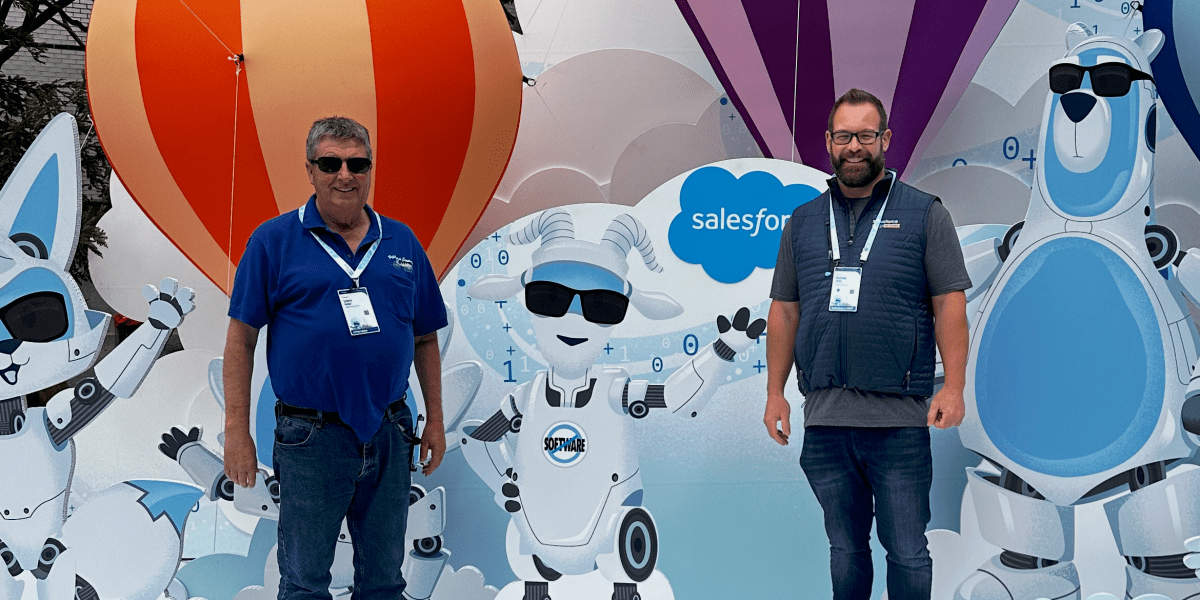
Larry Peter has as much personality as the cheeses that once made Julia Child melt. He once sold cheese out of a woodshed he built next to a schoolhouse he bought from Sonoma High School for a dollar and now he owns a 113-year-old facility — three city blocks in the heart of Sonoma County — that he bought in 2004 when the original cooperative shut down after 91 years.
He has never had a broker. Never had a distributor. Now he sees AI agents as the key to getting more real cheese and butter to the people.
As a result, he’s got something else, much to his surprise: a company that runs on artificial intelligence.
The man who rode a bicycle to buy a dairy
Larry Peter grew up in Sebastopol picking prunes, grapes, and raspberries to pay for school clothes and bicycles. His father worked a green chain at a lumber mill for 40 years and never stopped talking about the dairy farm that he wished he’d raised his kids on.
Larry got his first taste of the industry in high school, washing bottles and feeding calves at Miller’s Dairy for $35 a week. After graduating, he spent a decade at American Door, riding a bicycle — not driving — so he could save money. He paid cash for his first house at 18 with no co-signer, having sold his Corvette to make it happen. Then he paid cash for a second, and a third, eventually living in 15 different properties by 1985, using them as leverage to borrow against. That’s how he bought 320 acres and went into the dairy business, paying 25% interest on cows he couldn’t yet afford.
When the cow margins got tight, he started a potato operation, then a pumpkin patch. When the county told him he couldn’t run retail out of his dairy, he bought the schoolhouse and started making cheese out of it in 1995.
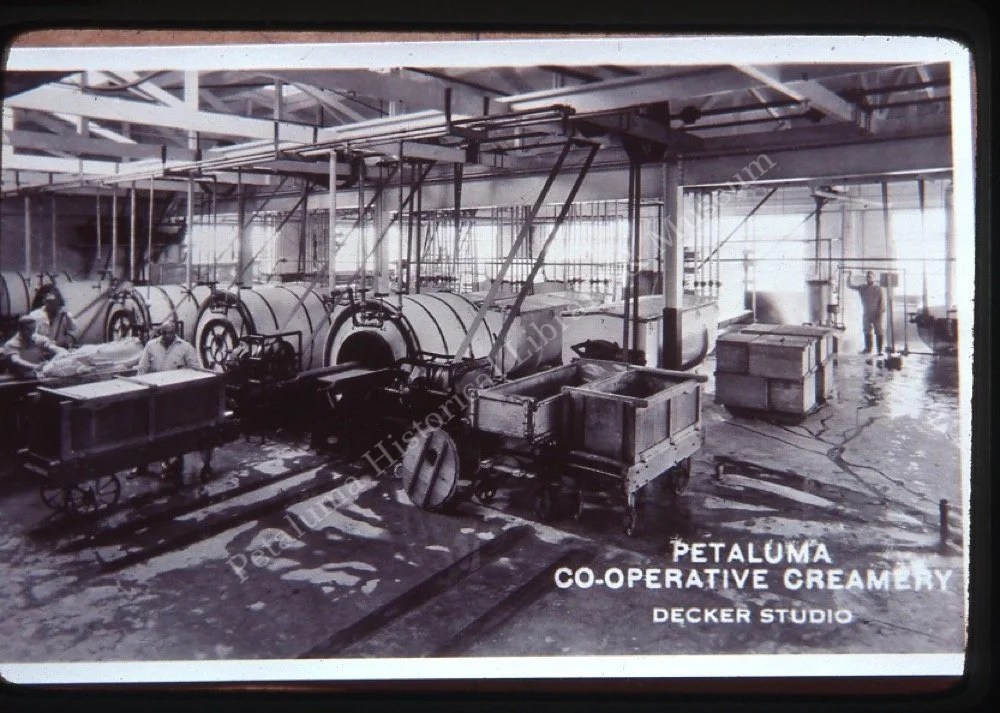
Then in 2004, Petaluma Creamery — a cooperative that 475 local farmers had belonged to — shut down after 91 years of continuous operation. Larry came down to buy a cream separator and ended up buying the whole facility.
He built it into something extraordinary. He supplied hundreds of Chipotle locations. He appeared on Martha Stewart. At peak, the business was doing roughly $50 million a year.
And then there was Julia Child. Before she died in 2004, he said that for years she called his white cheddar the best she ever ate. “She sat at my tailgate every single Saturday down in Santa Barbara (at the farmers market) and then she’d call and then I’d talk to her on the phone and that was right up to almost until she died,” Larry told me with pride. “She bought my butter every day. She always had my butter because my butter is real yellow.”
The creamery was still flying high going into COVID, with its cheese even served at the Kentucky Derby. But everything dried up in 2020, as it did for so many businesses. Just as Larry began to explain to me what happened, someone needed his attention. Someone outside is fixing a broken dryer on the production floor, and Larry — the founder, owner, and one-man force of nature — needs to deal with it.
That’s when his cousin, the tech-wizard business partner Daniel Peter, chimes in: “He had a series of things that all happened around the same time. There was COVID, which affected things like the customers, you know, the restaurant industries, things like that. The employees here weren’t really coming to work that much.”
But there were major personal difficulties. Larry’s father passed away, and just a month after that he had his own scare, undergoing an open-heart surgery that lasted for eight hours.
Petaluma and Chipotle discontinued their relationship in 2022 for various reasons, according to the Millers and Chipotle. The Millers stressed that this was just one of several factors, including Larry’s health and market volatility around the pandemic, that drove Petaluma to the brink of closure.
The final blow arrived in the form of a would-be buyer who offered a compelling price for the facility. Larry, exhausted and beaten down, agreed. The buyer strung him along for 18 months, promising $50,000 a month in rent that never appeared, offering new excuses every time an escrow date came and went. The failed deal blew a hole in his financing and he was in limbo, bleeding.
When the deal finally, definitively collapsed, Petaluma Creamery had 13 active accounts. That’s when Larry called Daniel.
The cousin he said he couldn’t afford
For years, Daniel visited Larry in the country and told him about his career in Silicon Valley, offering to help out if he was ever needed. Larry described his response to me: “I can’t afford this guy. I know what he makes.”
Daniel had spent 17 years deep in the Salesforce ecosystem. He’d built manufacturing enterprise resource planning systems for companies like Del Monte. He’d run Salesforce consulting practices. But when Larry finally came calling, Daniel happened to be on sabbatical. “I actually got a little burned out.”
Still, Daniel signed on as chief technical officer, then found the creamery was a business running entirely on paper and memory.
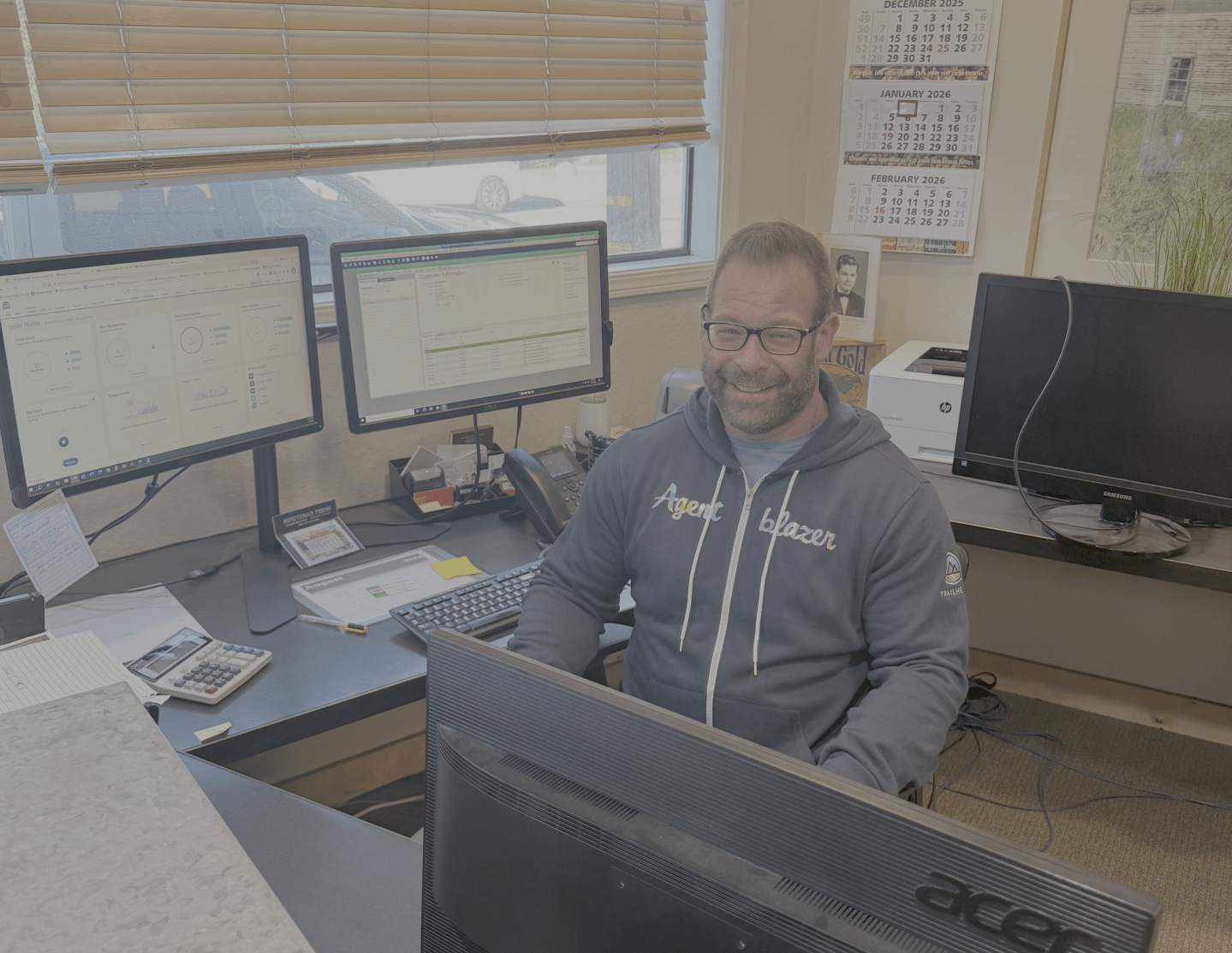
There was no fiber internet — just T1 lines, the kind of connection more common in the 1990s than the 2020s. Orders came in on handwritten forms that could get lost or had to be physically walked around the plant. Invoices were entered in QuickBooks using a 150-SKU code hierarchy that employees had to memorize — yellow cheddar was something like “C:CY,” and it only got more complicated from there. Everything was entered in pounds, but customers ordered in cases and pieces, which meant every transaction required manual math in your head or with a calculator.
“Forget about AI,” Daniel said. “It was like, how do we have a digital representation of an order?” The good thing was the raw data was good. “He has 20-plus years of emails, he has all the invoices he sent the customers from QuickBooks. He has (gigabytes of) unstructured data from the lab.” That means testing for all the different dairy products over the years and all of the ingredient information was ripe for data-mining. “We have a really rich foundation of data, which is, you know, one of the key pieces you need for AI.”
The first physical act was running a fiber-optic cable to a telephone pole. From there, everything moved to the cloud. Then the AI layer went on top.
courtesy of Petaluma Creamery
The AI pivot
Daniel built the new operating system for Petaluma Creamery on Salesforce and its Agentforce AI platform. The approach was methodical: establish the data foundation first, then automate, then add intelligence.
The tools Daniel built, in rough order of deployment:
Order-to-cash. A new interface replaced the memorized SKU hierarchy with natural language search. Type “Firehouse” or “Jack” or “Pepper” and the right product surfaces instantly. Quantities auto-convert from cases to pounds. Orders that once required training and mental arithmetic now practically wrote themselves. “It kind of almost reads your mind and lets you input orders super easily,” Daniel said.
Predictive ordering. The system ingests customer history and anticipates reorders. If a store has been buying Petaluma Creamery two-pound cheddar on a consistent cycle for years, the AI pre-populates the order. A sales rep can review and confirm a predicted order in seconds rather than building it from scratch. The system also surfaces items a customer usually orders but forgot to mention — reducing the leakage that happens when a store’s shelf label goes missing or a product gets moved.
AI-powered delivery routing. Geographic routes and delivery constraints are written not in code but in plain English prompts. Updating the routing algorithm requires editing a sentence, not spinning up a development cycle. “We just tweak the prompt,” Daniel said. “AI is sort of the black box that turns the prompt into the actual algorithm behind the scenes.”
Milk traceability. Every gallon of milk is tracked from farm arrival — logging gallons, pounds, temperature, time, and source farm — through production batches and all the way to the lot numbers on store shelves. The creamery can trace a wedge of cheese sold at retail back to the specific loads of milk that went into it, with full state compliance reporting built in.
Next up: a fully agentic customer service layer that will draw on the creamery’s full data archive to answer complex incoming questions — like whether the rennet used is GMO-derived — faster and more completely than any human rep could. Daniel described an ambition to create “more of a listening and transcribing style of a voice experience where our sales folks can take an order over the phone and Salesforce can basically create it in the background based on the call transcript and having all that context.”
If a customer is giving an incomplete answer, for example, he thinks the agents can look at the previous order history to fill in the blanks. An order for a “case of cheddar,” for example, can mean many different things. Before using agents, salespeople had to memorize a 150-SKU product hierarchy. The agent will actually give a better answer than a person, he argued, “because a person is not going to exhaustively search 20 years of data and come up with a nice customer service answer. They’re going to just stop at the first thing they find, probably.”
The retail veteran
Daniel rebuilt the plumbing. But the creamery also needed someone who knew where the customers were.
That’s where Kevin Goddard came in. A grocery industry veteran with more than 40 years of experience, Goddard knew the retail landscape and, crucially, he knew the creamery’s old relationships. He had been friends with Larry since 1998, when Goddard won a bet that he could sell 500 units of brie over a single July 4th weekend; in return, he helped Larry get his products into 177 Alberstons stores. Larry called him up in September 2025 and asked him to come out of retirement to give Daniel’s AI-powered data a shot.
Once Goddard and the sales team began working through the list, active accounts grew from 13 to more than 300. Michelin-starred restaurants such as Benu have signed up, as have the Sacramento Kings, whose arena is now stocking Petaluma Creamery products in their concession stands. The NBA team currently uses it in their nachos, grilled ham and cheese sandwiches, triple-double cheese dog, and chili cornbread bowl. But each season, the Kings innovate new items.
The financial target is $10 million in annual revenue by the end of next year, with a longer-term vision of $200 million to $300 million as the facility scales. The plant was originally built to process 140,000 pounds of commodity cheese per day; it’s currently running at roughly 3% of that capacity. The upside, in other words, is not incremental.
A thesis about what AI actually does to jobs
The dominant story about AI and the American workforce is one of displacement — white-collar jobs automated away, call centers replaced by chatbots, radiologists made redundant by algorithms. Petaluma Creamery tells a different story.
“There’s a good chance this place wouldn’t exist anymore without it,” Daniel said. “Yeah, the jobs are changing and we might not need as many people doing manual labor here, but (having) some jobs here are better than the place going away.”
Larry said he plans to deploy robots on the production floor to bag powder and pull 40-pound blocks from the towers but frames it as expansion, not subtraction. His vision is a larger headcount at $100 million-plus than the creamery employed at $50 million, because the product mix will shift toward artisanal goods like cottage cheese, kefir, yogurt, A2 milk, and grass-fed lines. Those products require more human craft, not less, and people will pay morefor precisely because a person made them.
Larry agreed that it aligns with what Fortune has reported on regarding the work of Alex Imas, an economist at the University of Chicago. H predicted the economy will ultimately migrate toward human-connected work — the artisan, the nurse, the teacher — while AI handles routine tasks. Petaluma Creamery could be a proof of concept.
“People want good cheese, a good product, the money is really in the cottage cheese, the yogurt, the keeper, the proteins, the ice cream with all the cream in it,” Larry said. “People want product that don’t have all this bad stuff in the cow. They want a cow. They want natural food. They want grass. They want clover. They want to know, Larry and Daniel made this and then their cows that are completely grass-fed, normal cows.”
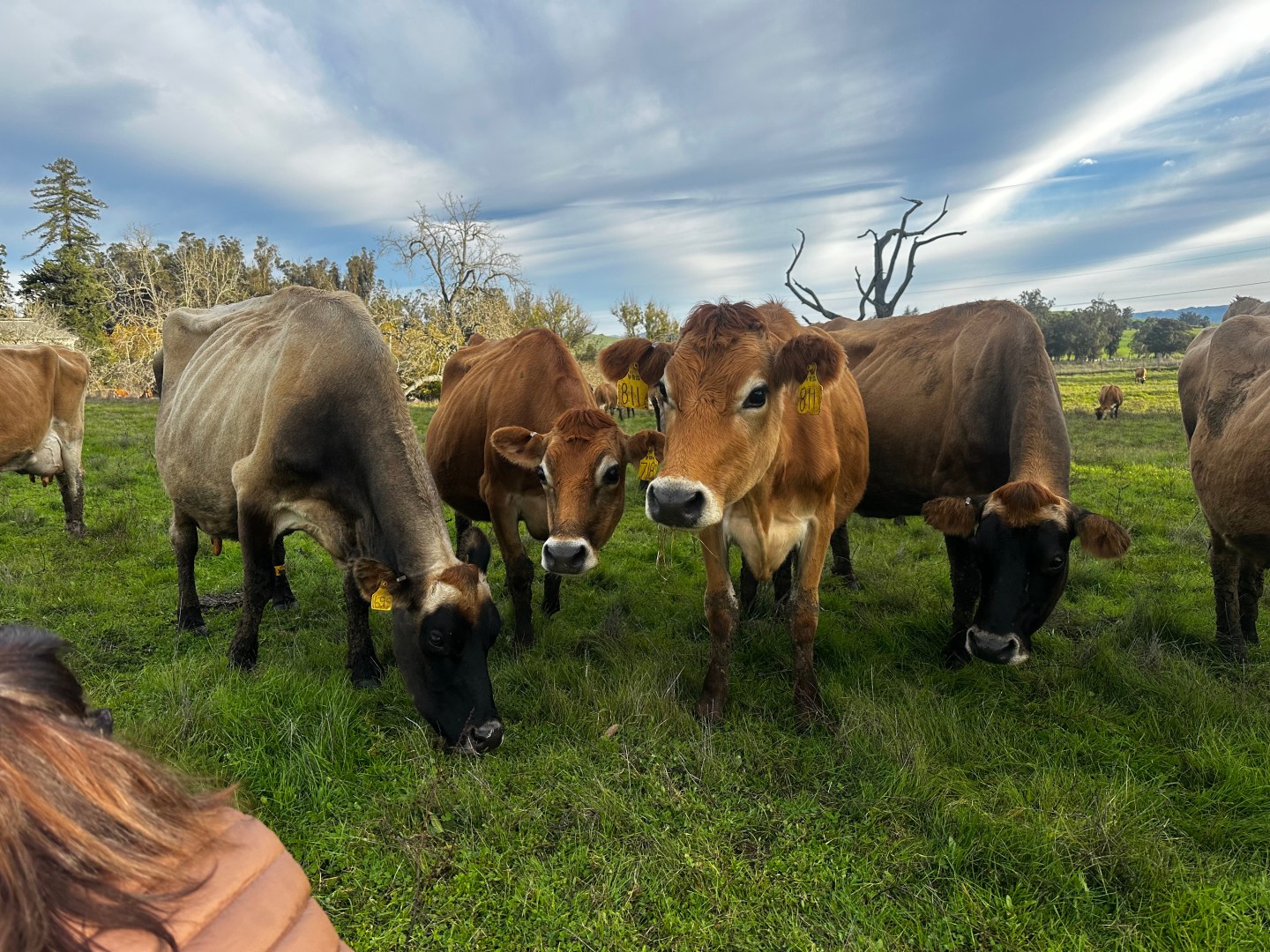
That’s why Larry has 400 Jersey cows eight miles up the road, even if Holsteins might make more industrial-scale sense. “We’re doing all Jersey, 100% Jersey, because that cow puts out more cream and more butter and it’s a heartier cow.” Besides, he added, “I have the cows with the pretty eyes.”
Daniel, who spent years in the plush comfort of Silicon Valley tech roles — unlimited PTO, big teams, no broken dryers — is logging something closer to 60 hours a week now, bouncing between laptop, factory floor, and a dairy farm eight miles up the road. He troubleshoots the programmable logic controllers the same way he debugs software: methodically, top to bottom. His old coworkers wish they had a life on the farm.
“All my colleagues are so jealous,” he said. “Like the people I used to work with, people from my remote teams and stuff that are just working from their home offices. When I see them at the conferences, they’re so jealous.”
He added: “The grass is always greener. But yeah, it makes me appreciate what I’m doing when I see people wishing they were doing something like this.”
