


When DoorDash agreed to buy Instacart for $17 billion, the deal yoked rival food delivery companies that already shared a common link: the same venture firm lurking in both boardrooms.
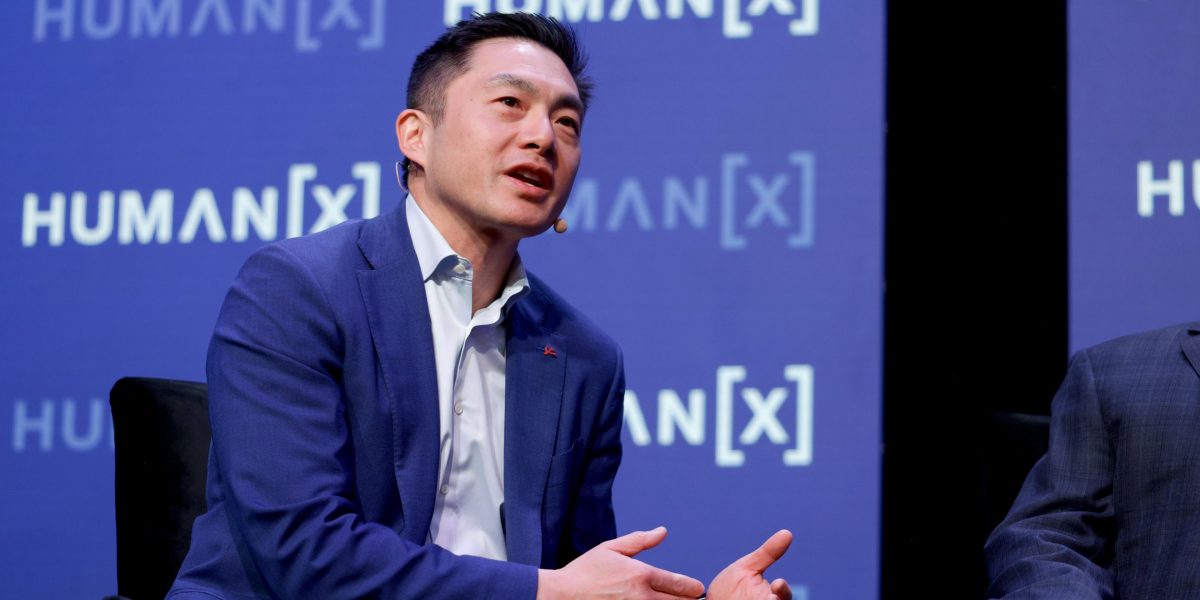
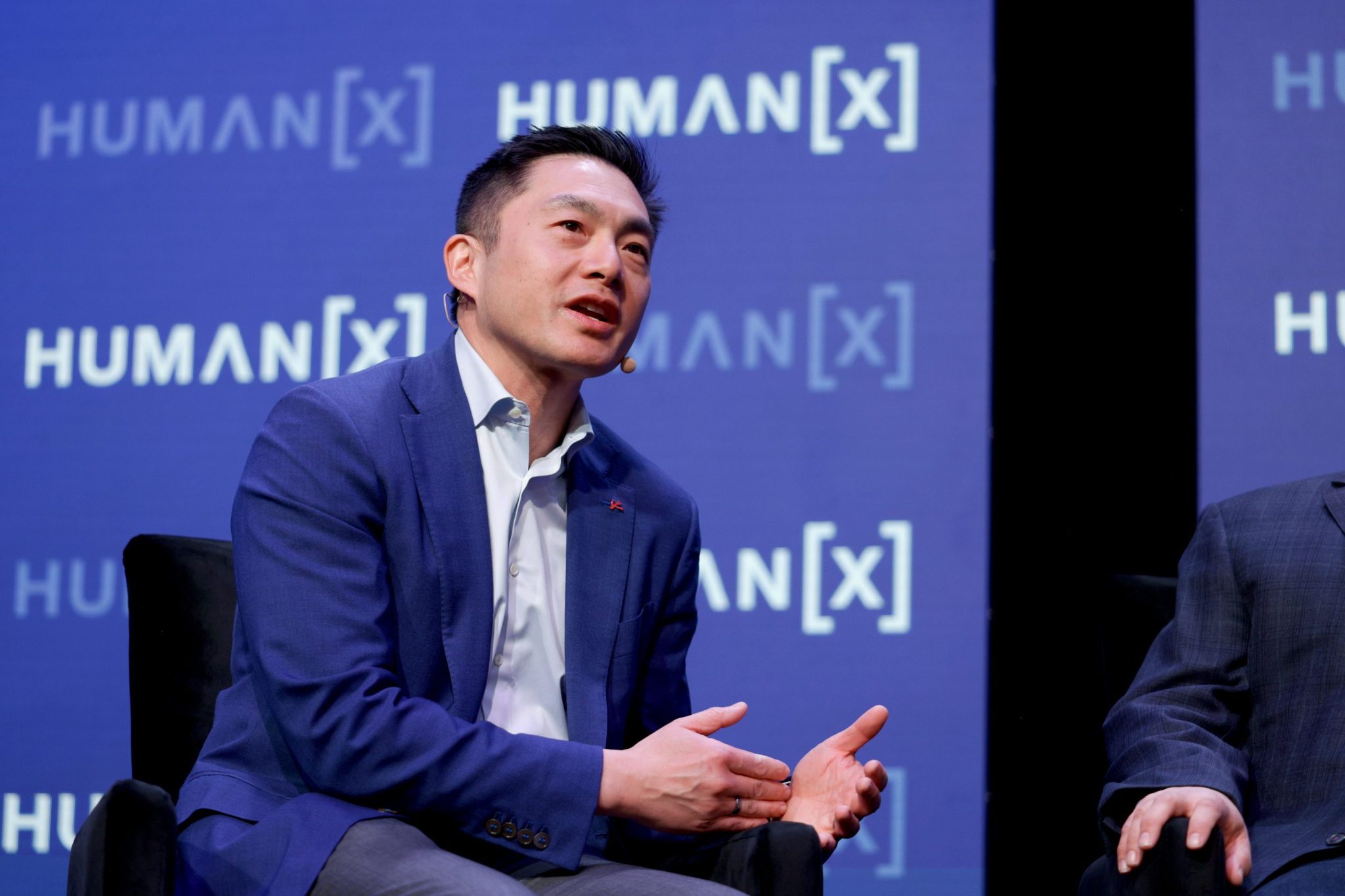
Alfred Lin, a partner at Sequoia Capital, sits on DoorDash’s board while Ravi Gupta, also a Sequoia partner, is Instacart’s lead independent director. That kind of arrangement, in which partners from the same investment firm sit on the boards of competing companies, is exactly what the Department of Justice is reportedly probing at venture capital Andreessen Horowitz. And for some antitrust scholars, the DoorDash-Instacart cash and stock deal is exactly why that kind of investor interlock matters.
A danger of interlocking directors is that companies become less likely to compete, said Mark Lemley, the William H. Neukom Professor at Stanford Law School, “because the directors have fiduciary duties to both companies, so they don’t want to encourage one company to do anything that would hurt the other.”
Another danger? Directors could encourage companies to merge, therefore “eliminating competition altogether,” Lemley wrote in an email.
“I think this merger raises all sorts of antitrust alarm bells, though in the current administration it is anyone’s guess whether the government will act to block it,” Lemley said.
DoorDash will pay $65 a share in the cash-and-stock deal for Instacart, a 26% premium to Instacart’s closing price on the last trading day before media reports of a possible acquisition. Instacart’s board unanimously approved the agreement, but the deal still needs approval from Instacart shareholders and regulators, including in Canada and Israel. On Monday, Reuters reported that the DOJ would review the merger, citing anonymous sources. The Federal Trade Commission declined to comment on a review of the purchase. The companies have said they expect the deal to close in late 2027 or the first half of 2028. Previous talks about a combination in 2021 ended over antitrust concerns.
But the board overlap between DoorDash and Instacart is hardly an outlier. Earlier this year, news broke that the DOJ was investigating a16z for a similar arrangement involving two other firms, Databricks and Fivetran. At issue in that arrangement is Ben Horowitz’ seat on the board of analytics platform Databricks and firm partner Martin Casado’s seat on the board of Fivetran, a rival platform.
Antitrust rules generally prohibit individuals and organizations from serving on the boards of competing companies. However, a Fortune review of board disclosures, securities filings, and venture firms’ websites found numerous examples of the same kind of board-investor overlaps the DOJ is reportedly probing. Venture firms including Iconiq, Sequoia, and Bessemer Venture Partners have partners serving on the boards of portfolio companies that either compete directly or have considerable market overlap.
This is just the tip of a potential iceberg. A study published in the Columbia Law Review last year that caught the eye of regulators documented the scope of the issue. The study, “Anticompetitive Directors,” relied on data from PitchBook showing more than 75,000 public companies, private businesses, and startups. The authors analyzed 454,334 investors and 3.8 million people with fund or company roles. They found 1,777 cases of a single person sitting on the boards of two direct competitors, touching 2,309 companies. They also found 4,632 “investor-level interlocks” in which two employees of the same investment firm sit on rival boards—a la the reported a16z probe.
Co-authored by Lemley, Wharton School professor Rory Van Loo, and judicial law clerk Lane Miles, the study found that 65% of the individuals serving on competing boards were leaders in private equity, venture capital firms, or other investment funds that invest in the companies whose boards the directors serve on.
The scope of the investor-level interlocks startled Lemley and Van Loo once they discovered the results. Van Loo said the authors first discussed their findings with the DOJ in 2025, and then one of the co-authors went deeper into their analysis with officials on a call in July of 2026, he said.
“There was a lot of interest,” said Van Loo. He added it was “baffling” that there hadn’t been more visible attention to the investor-level interlock issue given how prevalent the interlocks were.
In Plain Sight
The interlocks are a byproduct of how venture capital works, said Yaron Nili, a Duke University law professor whose landmark research on board-level conflicts and director interlocks predates the current probe. VC firms make investments in similar startups and then double down when there’s progress. A board seat is often par for the course when a firm writes a big check.
“The VC industry is a lot more susceptible to this,” Nili said. “The model is to invest in a number of companies in the same field and see which ones stick. Those that stick, you put your people on the board to help those companies and they stay on the boards for a while—even after the companies go public.”
Instacart, whose parent company is Maplebear Inc., explicitly names DoorDash as a rival in its annual financial report. And while DoorDash doesn’t name Instacart a competitor, it used Instacart as a peer for compensation benchmarking purposes from 2021 to July 2025, securities filings show. Meaning, DoorDash’s board reviewed Instacart along with other similar firms’ pay levels to assess the competitiveness of DoorDash’s own executive compensation program.
Since DoorDash went public in 2020, it has paid Lin, of Sequoia, a total of more than $1.3 million in cash and restricted stock units for serving on the board. Gupta, Instacart’s former CFO and COO, joined the Instacart board in 2023 days after its IPO and has been its lead independent director since August 2025. He has earned a combined $925,000 in cash and restricted stock in the three years since, according to securities filings.
“I suspect it is illegal,” wrote Lemley, the William H. Neukom Professor at Stanford Law School, in an email in response to a question about the DoorDash and Instacart board overlaps before the deal was announced.
The law itself has several carveouts. It doesn’t apply if either company has less than about $5.4 million in competitive sales, meaning revenue from products or services the two firms sell in competition with each other. It also doesn’t apply if those competitive sales make up less than 2% of either company’s total sales, or less than 4% of each companies’ total sales.
In 2025, Instacart reported revenue of $3.7 billion, while DoorDash posted revenue of $13.7 billion. DoorDash began a push into grocery and retail deliveries beginning in 2020, and has been eating into Instacart’s supermarket-delivery lane. DoorDash CEO and co-founder Tony Xu called grocery “the fastest-growing part” of the company’s marketplace business during its August earnings call. Instacart partners with Uber Eats for the restaurant meals it delivers.
“I would think Instacart and DoorDash have at least some overlap,” Lemley wrote. “But antitrust has a complex market definition process and the agencies would have to go through that process to make the case if it were contested.”
Nili, of Duke University, said companies can drift into competition over time. DoorDash started in restaurant delivery while Instacart started with groceries.
“Now, each of them does both,” said Nili. “They’re increasingly encroaching on each other’s territory.”
The history behind investments is often the industry’s main defense. However, Van Loo noted, the fact that companies weren’t rivals when investments were made does not buy indefinite cover.
“There’s no lifetime grandfather clause for antitrust enforcement,” he said. “The statute grants you a year after the companies become competitors—after that, one of the board members should step off.”
DoorDash, Instacart, and Sequoia did not respond to multiple requests for comment.
Iconiq Capital has invested in AI-based accounting and financial firms FloQast, HighRadius, and Rillet, which are all competing for traction with chief financial officers, accountants, and controllers.
In 2020, Iconiq led a $125 million funding round in HighRadius, touting it as “game-changing” for CFOs, according to a quote from Iconiq founding partner and board member Will Griffith at the time. When Iconiq partner Roy Luo joined the board of FloQast in 2024 along with a $100 million investment, he called FloQast “a leading driver of transformation within the accounting and finance industry.” Meanwhile, HighRadius now describes itself as “the best FloQast alternative for AI-powered close and consolidation” on its own website.
In August, Iconiq led a $100 million round that boosted AI-enabled accounting platform Rillet to a $1 billion valuation. (It co-led Rillet’s $70 million Series B a year earlier.) “In our view, Rillet is the clear market leader in AI-native accounting infrastructure,” said Iconiq general partner Seth Pierrepont in a statement in August 2026. Pierrepont is now on the Rillet board, according to the company.
Pierrepont, Luo, Griffith, and Iconiq did not respond to requests for comment.
Fortune reporting also identified other investor-level overlaps, including cloud application-hosting platforms Render and Netlify. Bessemer Venture Partners’ Elliott Robinson describes himself as serving on the boards of both companies, and both have Bessemer’s financial backing. Netlify’s knowledge base compares the two technically, and defines Netlify as a platform “for building and running web front-ends” and Render as a “platform-as-a-service for running whole applications.”
In a statement, Bessemer said the two are not competitors because Netlify targets front-end development while Render is for back-end and AI applications.
Rachel Stephens, research director at developer-focused analyst firm RedMonk, said she considers them to be “direct competitors.” Both are “part of the new wave of PaaS offerings targeting developers who want to build applications without worrying about underlying infrastructure,” Stephens wrote in an email. Historically, Netlify focused more on frontend use cases whereas Render started as an alternative for backend processes.
“In practice today, the two platforms have overlap in use cases,” said Stephens.
Netlify and Render did not respond to a request for comment.
The Probe
The DOJ’s year-old probe into a16z was first reported by Bloomberg and centers on competing AI companies. Horowitz, co-founder of a16z, serves on the board cloud platform Databricks, now valued at $190 billion following a $5 billion funding round that brought in new investors alongside Andreessen Horowitz. Meanwhile, a16z partner Casado sits on the board of Fivetran, a data integration firm also backed by Andreessen Horowitz. Casado also sat on the board of dbt Labs, which Fivetran acquired in June after a DOJ review. The board seat investigation began around the same time as that review, Bloomberg reported.
Both Fivetran and Databricks help organizations analyze and house their data and have gained significant attention due to the AI boom. Though it is worth noting: Fivetran was last valued in a funding round at $5.6 billion in 2021 before its all-stock merger with dbt Labs, and the former is a fraction of the size of Databricks. And Databricks’ most prominent competitor is Snowflake, a publicly traded company with a $115 billion market cap.
If the DOJ determines the Databricks-Fivetran-a16z arrangement violates antitrust law, it could put the entire VC industry in the government’s crosshairs. At this point, that is nowhere close to a given because a16z has curried favor with the Trump Administration, aligning itself with Republicans in Congress and at government agencies. There’s also nuance in how this all works: Some VCs say that the practice of sitting on competitors’ boards is already rare, and that, in the situations where it does happen, the firm often invested early enough that the two startups weren’t competitors at the time.
At the heart of the issue is Section 8 of the Clayton Act, a 1914 statute that bars the same person from serving on competing boards. Section 8 applies when each company clears two thresholds: capital, surplus and profits above $54.4 million and more than $5.4 million in competitive sales. There was almost no enforcement of the statute for decades until the Biden Administration’s DOJ antitrust leaders forced directors off a dozen publicly traded company boards starting in 2021. Certainly, there have been a few one-off resignations over the years however due to antitrust issues. In 2009, Google CEO Eric Schmidt famously resigned from Apple’s board because the late Steve Jobs said Schmidt would have to recuse himself “from even larger portions of (Apple board) meetings due to potential conflicts of interest” as the two companies emerged as direct rivals for the mobile software on smartphones.
The question now is whether the DOJ’s momentum will continue, and whether officials will target venture and private equity firms. The reported a16z probe involves an investor-level interlock as does the Sequoia overlap at DoorDash and Instacart. Horowitz and Casado are two different people but they work for the same investment firm. The Clayton Act defines “person” broadly enough to include corporations but the issue has always been murky and there have been very few cases that would have settled it. Andreessen Horowitz declined to comment.
The law itself was designed as a prophylactic to prevent price-fixing and coordination by removing the opportunity or even the appearance of collusion being possible before it could happen. During the handful of times the issue has come up in the past, companies get questions from regulators and board members will resign their seats to resolve the conflict because duking it out isn’t worth it for either side.
Overall, the concern isn’t that these arrangements produce explicit conspiracies, Van Loo explained. It’s that a board member with ties to a competing company can subtly influence which markets a startup enters, which products it builds, and how aggressively it competes with nary a text message exchanged between rival companies—or board members.
“I think it is important that the same VC firms not end up controlling or influencing multiple competitors in the same industry,” wrote Lemley. “That reduces competition and makes cartels much easier.”
The a16z investigation is also juicy news because of the target. The venture firm has cultivated deep ties with the Trump White House and both co-founders donated millions to a group supporting Trump’s 2024 campaign.
Given the blue wave that swept the country following the midterm elections, the landscape for antitrust enforcement could shift dramatically. Law firm Skadden Arps alerted clients in a memo this month that Democratic congress members likely to hold leadership roles on key committees will hold hearings on aspects of “federal antitrust enforcement, including high-profile mergers,” the memo states.
But regardless of the outcome, sitting on competing boards is just bad practice for VCs, said Rebecca Lynn, founder and managing partner at VC firm Canvas Prime.
“Firms try to talk their way around it,” Lynn told Fortune. “They try to say ‘well, we won’t share data.’ It’s nonsense. I’m generally pretty mystified that founders allow this. Are you really going to let a board member sit on a competitor’s board? Would a public company board member sit on the board of Coke and Pepsi?”
