


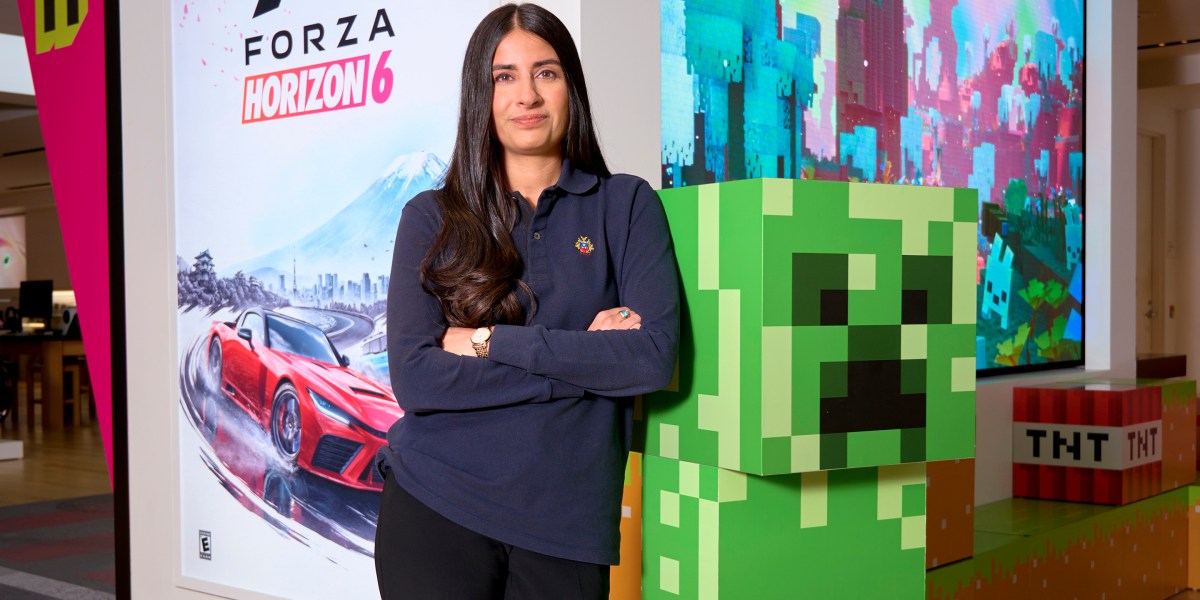
Asha Sharma returns from one of her walking meetings around Microsoft’s sprawling campus in Redmond, Wash., to her relatively new office in the Xbox building, reached via a 1,100-foot-long bridge from the main offices. It’s a brisk early September afternoon, and Sharma is wading through the next series of changes she’ll make at the legacy gaming business. There are more layoffs to complete and more studios to consolidate.
Much is still new for Sharma, the 38-year-old executive whom Microsoft CEO Satya Nadella in February put in charge of turning around one of entertainment’s biggest brands. Her office, adorned with Xbox controllers, framed Halo game discs, and a Tony Hawk’s Pro Skater skateboard, at first seems like an odd fit for an executive who famously had zero past video game experience.
Yet the Xbox CEO who’s replaced gaming legend Phil Spencer is moving fast. Xbox’s finances have been in shambles while its market share has tanked from its peak years ago. Sharma must fix its economics while improving its brand. She has been blunt about Xbox’s poor performance; has cut thousands of staff members; is reimagining how Xbox markets and sells its products; is upending its tech stack; has divested or reorganized smaller studios; and is focusing Xbox around its biggest franchises and publishing groups, including Blizzard Entertainment.
If Spencer was a gamer’s gamer, Sharma is the decisive boardroom boss.
Only Xbox’s is a very big, and opinionated, board. Every gaming conference Sharma attends, every decision she makes, and every post she publishes on social media is being closely watched by rabid gaming fans and Microsoft’s top brass.
“It’s hard to be a first-time CEO … where everybody sees everything you do,” Sharma told Fortune, sitting in one of her office’s blue velvet chairs, with several packs of NeeDoh stress balls by her side and wedding invitations from fans on her desk. “We are trying to get done an inordinate amount of things in an inordinate amount of time.”
The attention, Sharma said, is a reflection of how much Xbox matters to people. “The benefit of everybody caring is that you’re going to be able to pick out things that people really care about to actually make our product better,” she said.
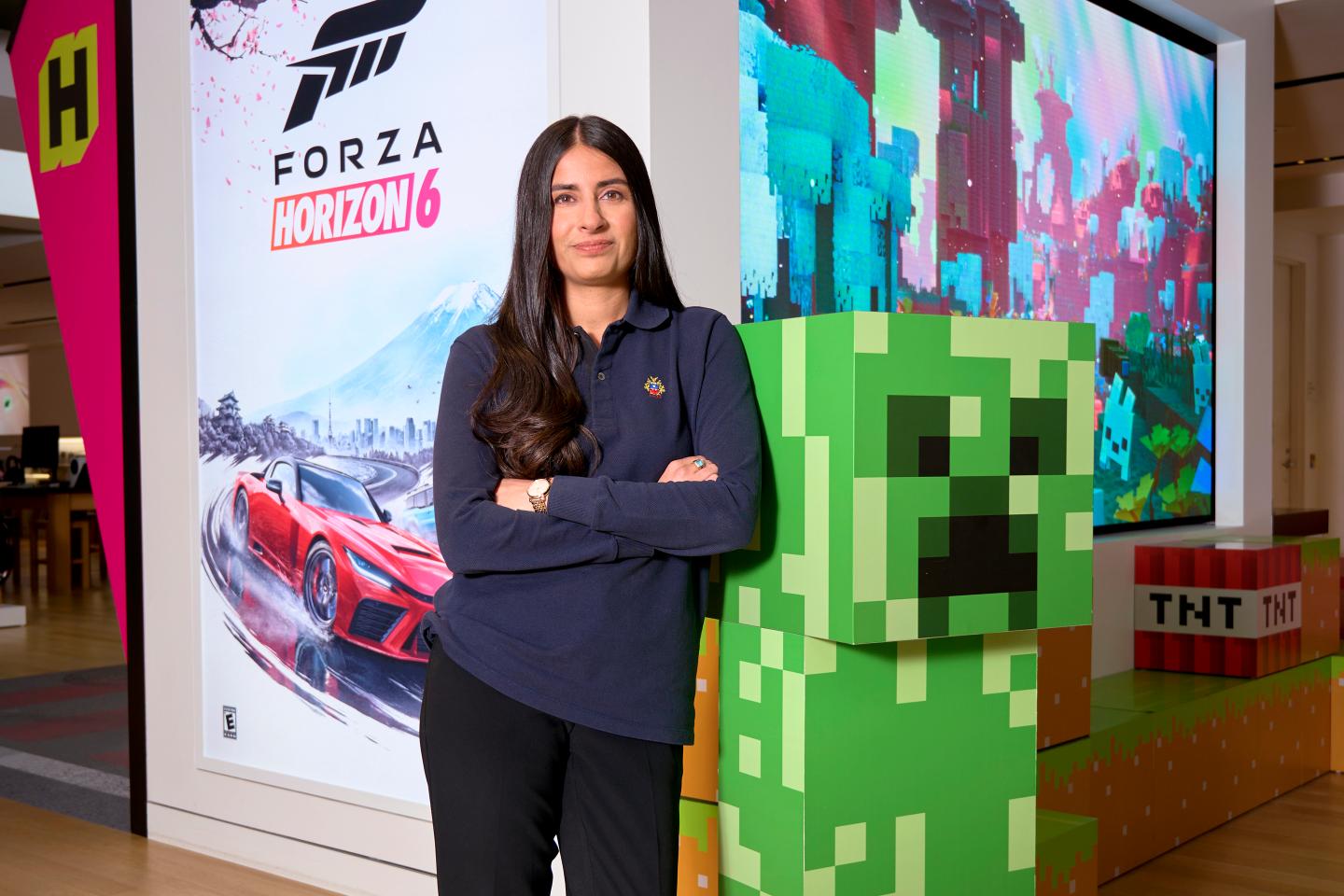
Unafraid to create tensions, the jacket- and sneaker-loving executive has come in clear-eyed and with swagger, indirectly questioning her predecessor’s strategy, and has shown a remarkable knack for marketing that plan with deftly written employee memos, new slogans, and strategic posts on social media, where meme after meme of Sharma also appear. (One deepfake video shows her yelling, “You’re all fired!” to a group of studio employees.)
MERON MENGHISTAB for Fortune
Flashy moves aside, Sharma has a challenging road ahead. Turning around a sprawling $21 billion business that includes hardware, creative studios, and thousands of video game titles is a task that would test even the most experienced of CEOs. And at a time when Microsoft is intensely focused on competing in the AI race, many industry observers wonder how committed the company is to the gaming business, and if Nadella has put Sharma in charge to prepare for an eventual sale or spinoff.
For an enterprise software company like Microsoft, a consumer gaming business stands out as a bit of an “odd condiment,” said Joost van Dreunen, a gaming expert and professor at NYU’s Stern School of Business. “How you value, operate, manage, and finance a creative division is very different than most of the other parts of the Microsoft empire.”
As Sharma works to revitalize the storied gaming unit, Microsoft employees, investors, analysts, and gamers are all focused on a key question: Can a gaming industry outsider bring Xbox back to its glory days—and if she can, under what structure will that happen?
A storied franchise
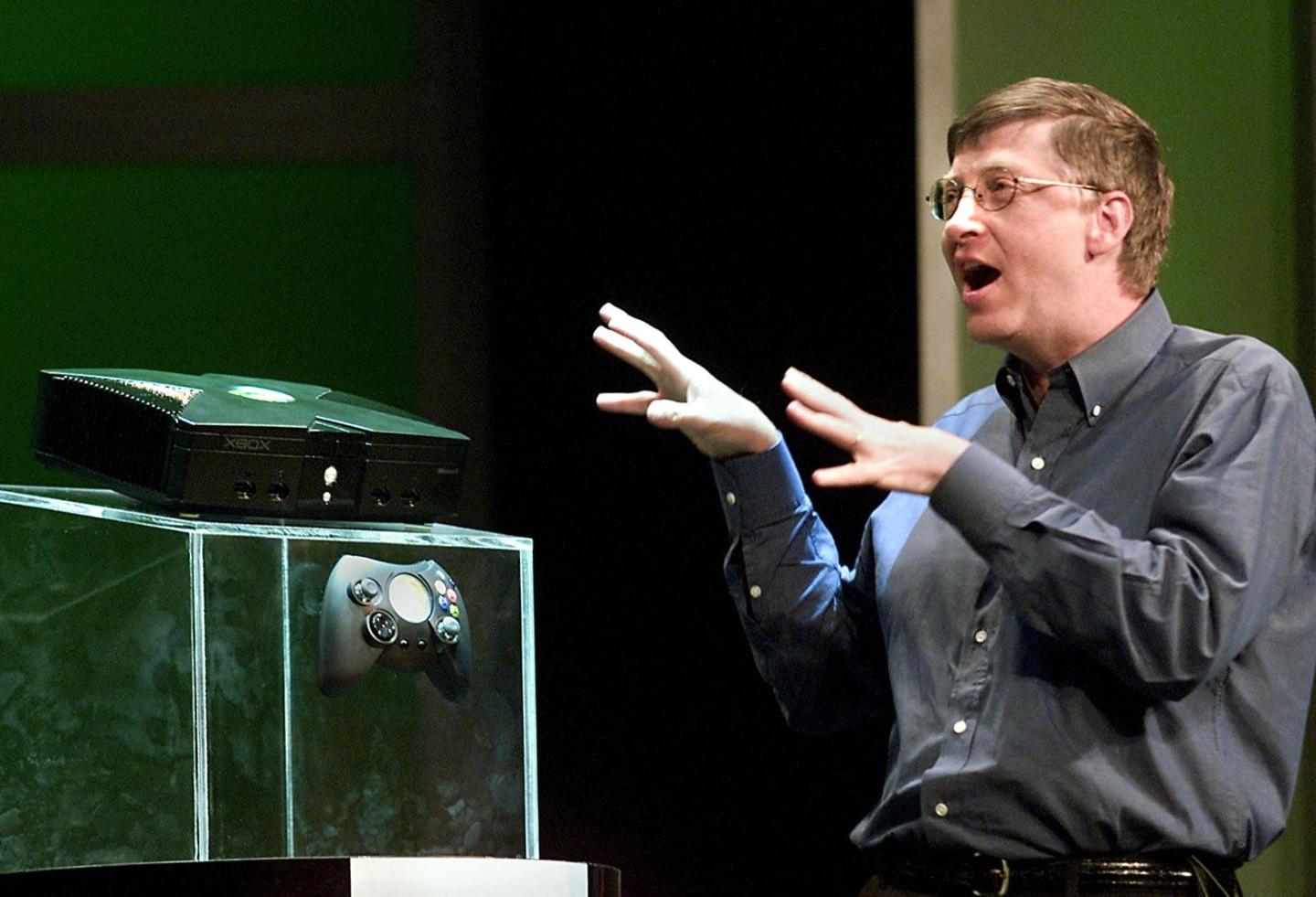
For all its current challenges, Xbox is a Microsoft success story. In the quarter-century since the software giant launched its first console, Xbox has grown into one of the company’s most visible and influential global consumer brands. Even if you’ve never picked up a game controller, there’s a good chance you recognize some of its hits.
There are cultural touchstones like Halo, a first-person shooter game that became a global multimedia franchise spanning a television series, comic books, and toys.
There’s Xbox Live, which helped make multiplayer online gaming a mainstream form of entertainment.
And there’s the beloved Xbox 360 console of the mid-2000s, which at its peak rivaled Sony’s PlayStation in sales, and on which a generation of young gamers—including this writer—cut their teeth.
With Microsoft’s 2023 acquisition of game publisher Activision Blizzard for $69 billion, Xbox gained custody of blockbuster titles like Call of Duty, World of Warcraft, and Overwatch, making it one of the most significant players in a video game market that has ballooned to several times the size of the global theatrical box office.
The fact that Xbox now finds itself in fix-it mode instead of on a victory tour for its 25-year milestone is the result of what current and former employees say has been a series of strategic miscalculations, conflicting internal priorities, and a loss of focus on the basics.
Game Pass, a Netflix-style monthly gaming service, helped Xbox build a subscription business. But it also led to a cannibalization of sales for the company’s higher-priced first-party game titles, especially during the critical launch period. And competing internal metrics within different teams—such as subscription revenue versus store revenue—exacerbated the problem, said former employees.
As Microsoft acquired more game publishers—including Minecraft-maker Mojang Studios—it didn’t pay enough attention to its core console, which still represents 80% of its business, former Xbox employees said. PlayStation and Nintendo have offered more exclusive titles that lock in gamers.
The Activision Blizzard acquisition, in particular, made the overall business more complex and intensified pressure to show returns. The purchase vaulted Xbox to become Microsoft’s third-largest business by revenue.
“If there’s any place that we got out of sync maybe in the last five years, it’s not that any one of those (individual bets) wasn’t working. It’s just that we hadn’t connected the dots maybe as well as we should have,” Matt Booty, Xbox’s chief content officer, told Fortune.
JOHN GURZINSKI/AFP via Getty Images
While Xbox remains one of the three major console platforms, it’s seen a big drop-off. Current-generation Xbox consoles have sold just a little over a third as many units as the PlayStation 5, according to third-party estimates. Higher hardware costs, fueled by memory chip shortages, are adding to the woes.
A Microsoft measure of profit margin has been around 3% for the Xbox unit, a third to a tenth of competitors’ levels and a far cry from the typical expectations Microsoft Chief Financial Officer Amy Hood has for its major businesses.
Sharma’s plan
Sharma’s turnaround strategy is about focusing on hardware, player experience, high-value franchises, updating Xbox’s tech, and meeting gamers where they’re at.
“We’re not here to do the minimum viable thing to just have a good business,” she said. “We’re here to be the No. 1 entertainment company.”
Some of her vision is becoming clearer. Xbox is planning a major overhaul of Game Pass that would have players choose features à la carte, including add-ons for console-only games, cloud gaming, and multiplayer, with the system operating on a tiered structure, according to people familiar with the strategy. Sharma also plans to release a next-generation handheld device by the 2027 holiday season and the next console by the holidays in 2028.
Inside the company’s secretive lab, known as Building 87 on campus, she has been plotting with lead designers such as Carl Ledbetter about the next-gen Project Helix hardware that could get gamers to stick with Xbox for mobile play, tinkering in regular stand-up meetings over prototypes and which strategic partnerships might help Xbox evolve.
While she has a reputation for being blunt, she is also introverted. In meetings, she often sits back and listens, sometimes while on her phone, yet tracking every detail, stopping discussions to ask sharp, probing questions or offer direct feedback, staff members said. She’s often chewing gum, and she is known to call colleagues from her car to check in while on her morning commute.
“As a leader, you’re taught to be confident, and I think being curious is way more important,” Sharma said. “If you’re confident, you might be right, and if you’re curious, you will find a better way. If people understand what’s happening, they will come up with better ideas to fix it than anyone else will.”
Soon after her appointment as head of Xbox, Sharma traveled to Blizzard’s campus in Irvine, Calif., to get a sense of gaming culture and meet with Blizzard President Johanna Faries, who told Fortune that Sharma has led primarily through inquiry, asking a myriad of questions to understand how things are working.
Ever the marketing whiz, Sharma had Xbox’s new motto plastered on office walls after she took over: “Great games; return of Xbox; future of play,” it reads. On her X account, which she runs herself, she celebrates major announcements and posts photos of her work travels. One recent photo captures her wearing aviator sunglasses and an Xbox zip-up, standing next to Japanese video game designer Hideo Kojima, who will develop his much-anticipated stealth game Physint with Xbox after a deal with Sony fell through.
Sharma recently created a new arm within Xbox meant to centralize and double down on commercial opportunities for top franchises such as Minecraft, similar to how Disney spreads its Marvel brand into movies, shows, theme park attractions, and more. A new team will also explore fresh ways to create and distribute its games across its devices using technologies such as AI.
Xbox is also planning and rolling out more games exclusive to its platform, including Gears of War: E-Day, which launched Oct. 6.
Another noticeable shift has been to steer financial resources away from smaller studios toward those that make Xbox’s most iconic franchises, with the goal of more frequent major releases. (With Minecraft, specifically, the goal is to make it more competitive with Roblox, which is popular with younger generations). Brian Fargo, a game designer who is developing the upcoming first-person role-playing game Clockwork Revolution, told Fortune that under Sharma, studios must present a clear, commercial “investable business case” rather than expecting blank-check funding.
MERON MENGHISTAB for Fortune
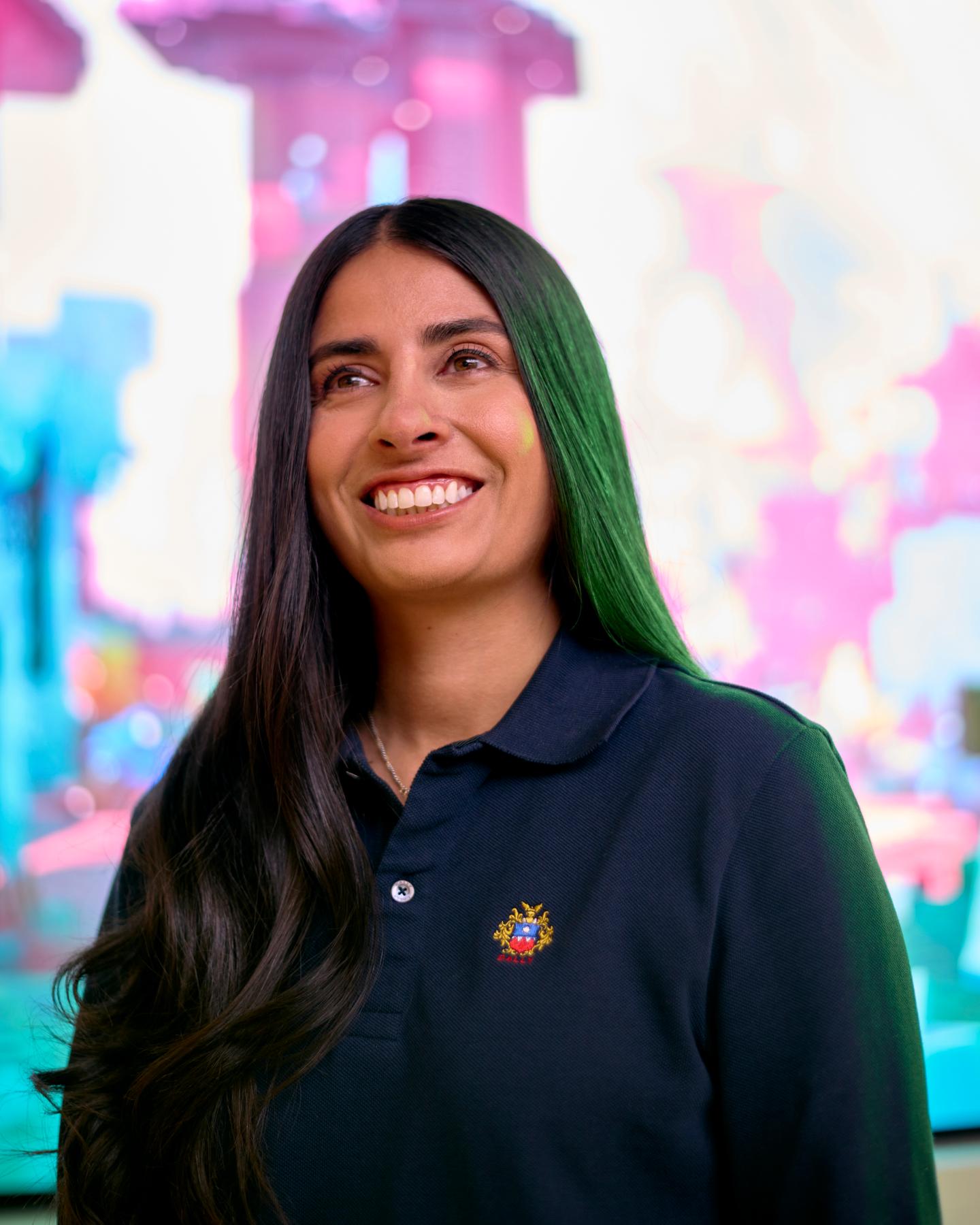
The hard-nosed approach to costs is also evident inside Xbox. So far, Sharma has cut 1,868 people as part of plans to reduce headcount by 3,200 during the next year, and she’s slashed several management layers. She’s planning the next rounds of layoffs for this month, November, and January, people familiar with the plans said, although layoff plans can change. Among the laid-off have been devoted staff members who had worked at Xbox for decades, which could mean a loss of valuable institutional knowledge.
Some employees have appreciated Sharma’s transparency, but the decision to structure the layoffs in several waves has left some staff demoralized, feeling as if they are sitting under a yearlong cloud, waiting to see if their roles will be eliminated next. There have also been some hiccups: Fortune identified at least one Xbox employee who was laid off but then given a chance to stay at the gaming unit.
Sharma acknowledged the high-stakes environment she’s navigating and tough decisions she’s had to make, but said she values people and doesn’t intend to be transactional.
At an organization as big as Microsoft, there’s also been inevitable drama, including a recent rekindling of an old turf battle between the Xbox and Windows teams.
The two sides have clashed over what software should run Project Helix, the next-generation hardware. Windows leaders wanted an upcoming handheld device to use a trimmed-down version of Windows Home. Sharma’s team, meanwhile, has sought to build and control its own software to get the best gaming performance.
Tensions ran high enough that a senior Xbox executive threatened to scrap the handheld project rather than adopt the Windows build, according to people briefed on the clash. Xbox is now largely controlling the direction of the operating system for the project, though Sharma emphasized the two still collaborate closely, saying, “We can’t build Helix on our own.”
AI background
Some people familiar with the matter also said engineering deadlines for Project Helix have been moved up by at least several months, putting pressure on development teams to get the work done faster, including by using AI. Responding to how AI affects Xbox’s goals or place within Microsoft, Sharma said she won’t use “AI for AI’s sake,” viewing it as a tool to solve specific engineering and performance problems such as developer workflows.
Successfully navigating those kinds of conflicts will be key if Sharma is to build up the authority and credibility necessary to get Xbox back on track.
Before Nadella chose her to run Xbox, Sharma led the product side of the group that built Microsoft’s AI Foundry platform and was also involved in products for the coding AI tool GitHub Copilot. She’s one of several newer or younger executives whom Nadella is entrusting as longtime company leaders continue to exit during the fast-moving AI boom.
A mother of three who is of Indian descent, Sharma grew up in Racine, Wis., along Lake Michigan. Her parents divorced when she was young, and her mother worked in retail. As a teenager, Sharma worked at a golf course and sold coupon books to earn money. She’s discussed her habit of morning runs and pour-over coffee, her packed work and travel schedule, and her second-degree black belt in the Korean martial art tae kwon do.
“The number one thing that I’ve worked on through (my life) is just how to learn,” she said. “How to learn the space; how to learn to solve problems; how to learn from people that are just like you and nothing like you.”
After earning a business degree from the University of Minnesota in 2011, she began her career in Microsoft’s marketing department before eventually landing at Meta Platforms, where she was vice president of product leading teams behind the messaging tools on Facebook and Instagram. In 2021, she became Instacart’s chief operating officer, helping guide the grocery-delivery company through its initial public offering and the effort to scale the business toward profitability.
Ina FASSBENDER / AFP via Getty Images
Sharma’s specialty is jumping into industries where she has no background and quickly identifying problem areas to fix, said Eric Boyd, a former Microsoft executive who brought Sharma back to Microsoft in 2024.
“If someone’s not performing, she will tell them that day that this is not working,” Boyd said. “She will change direction on the course that we need to go.”
Does Microsoft want Xbox?
When it comes to Xbox’s trajectory, many wonder if the turnaround effort will ultimately point to a new home base.
After Sharma was announced as Xbox CEO in February, staff members’ emails changed from ending in microsoft.com to xbox.com. In April, Microsoft dropped its Microsoft Gaming title and changed the division’s name to Xbox.
Several current and former staff members believe Xbox is being prepped for an eventual sale, spinoff, outside investment, or conversion into a subsidiary. Some said they were aware of a high-level presentation, made after Sharma took over, that explored such scenarios. Tech news website The Information earlier reported on discussion of a potential spinoff.
Judson Althoff, who is in charge of Microsoft’s commercial side and is one of the company’s highest-ranking executives, told Fortune that Xbox is valuable to Microsoft’s broader enterprise business because its low-latency demands stress-test Microsoft’s cloud, and it helps the company maintain retail relationships with giants like Walmart while connecting the company to creator demographics through Minecraft.
“Asha is one of the best leaders we have at the whole company. We would not have put her on a business we intend to sell,” Althoff said. “There’s going to be a ton of speculation about all this. Time will tell.”
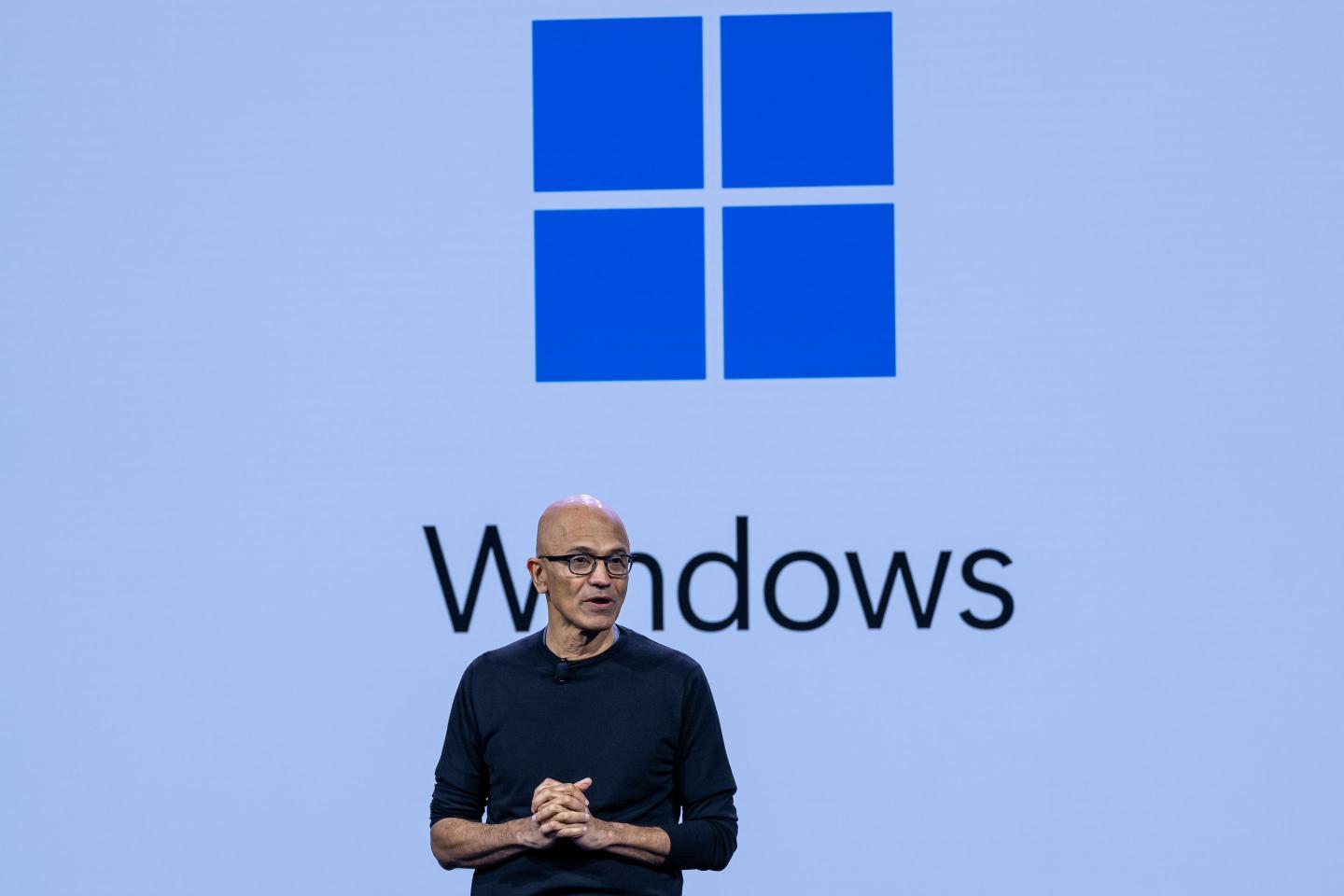
It’s also clear that few things matter at Microsoft right now as much as AI. Most employees work on the technology in one form or another as Nadella pivots the software giant to win the enterprise and cloud computing parts of the AI revolution. Former employees and analysts have wondered whether Xbox has a place in that push.
David Paul Morris/Bloomberg via Getty Images
Because Microsoft is spending heavily to win the AI race, it may over time simply have to offload non-AI parts of its business, said van Dreunen, the NYU professor.
“Before they drive high-margin revenue from their AI investment, they’re going to start having to—to stay warm—they’re going to have to burn the furniture,” he said. “If that’s the future that comes around, then Xbox would be increasingly attractive for selloff to fund their AI future.”
Will Sharma’s plan work?
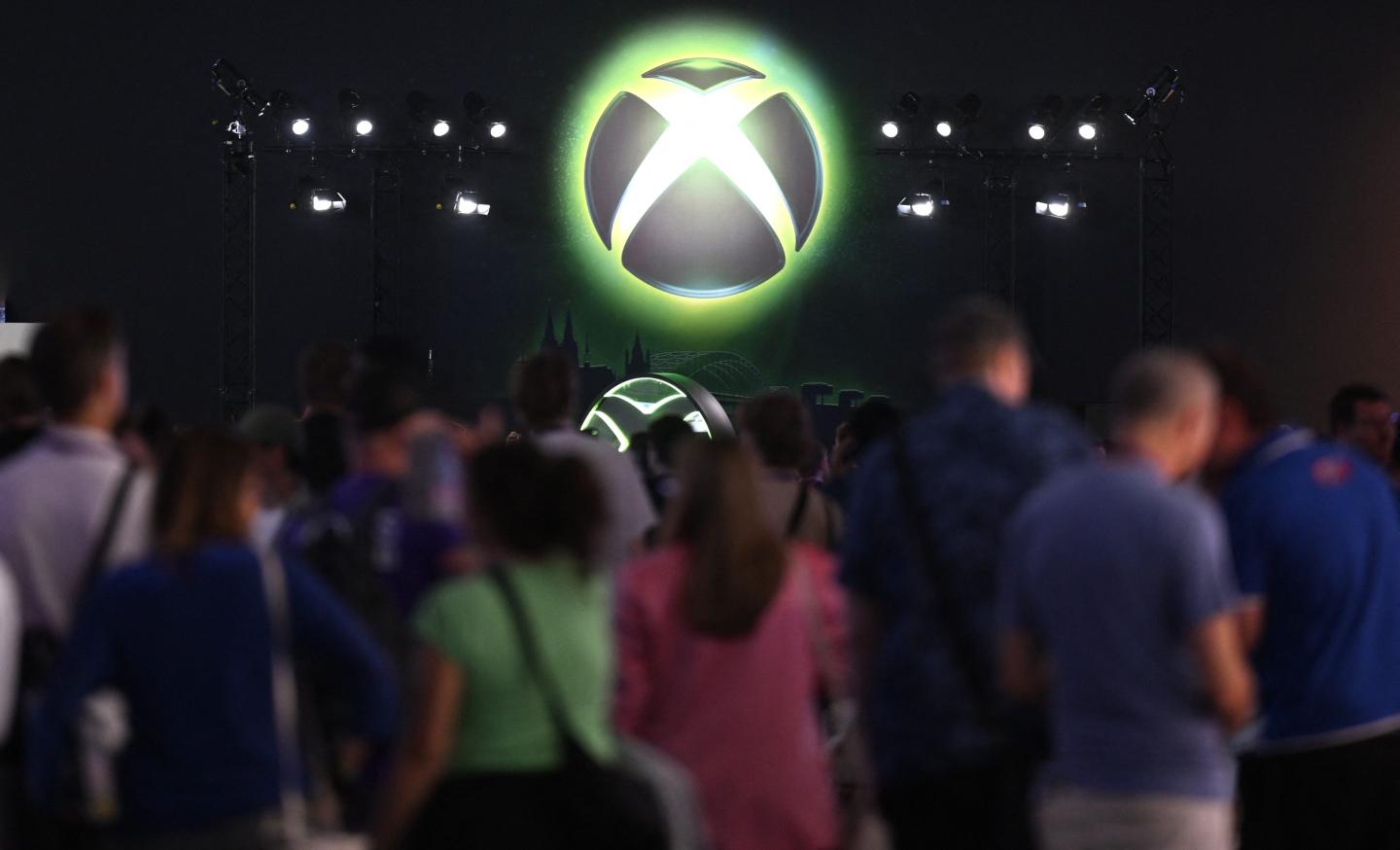
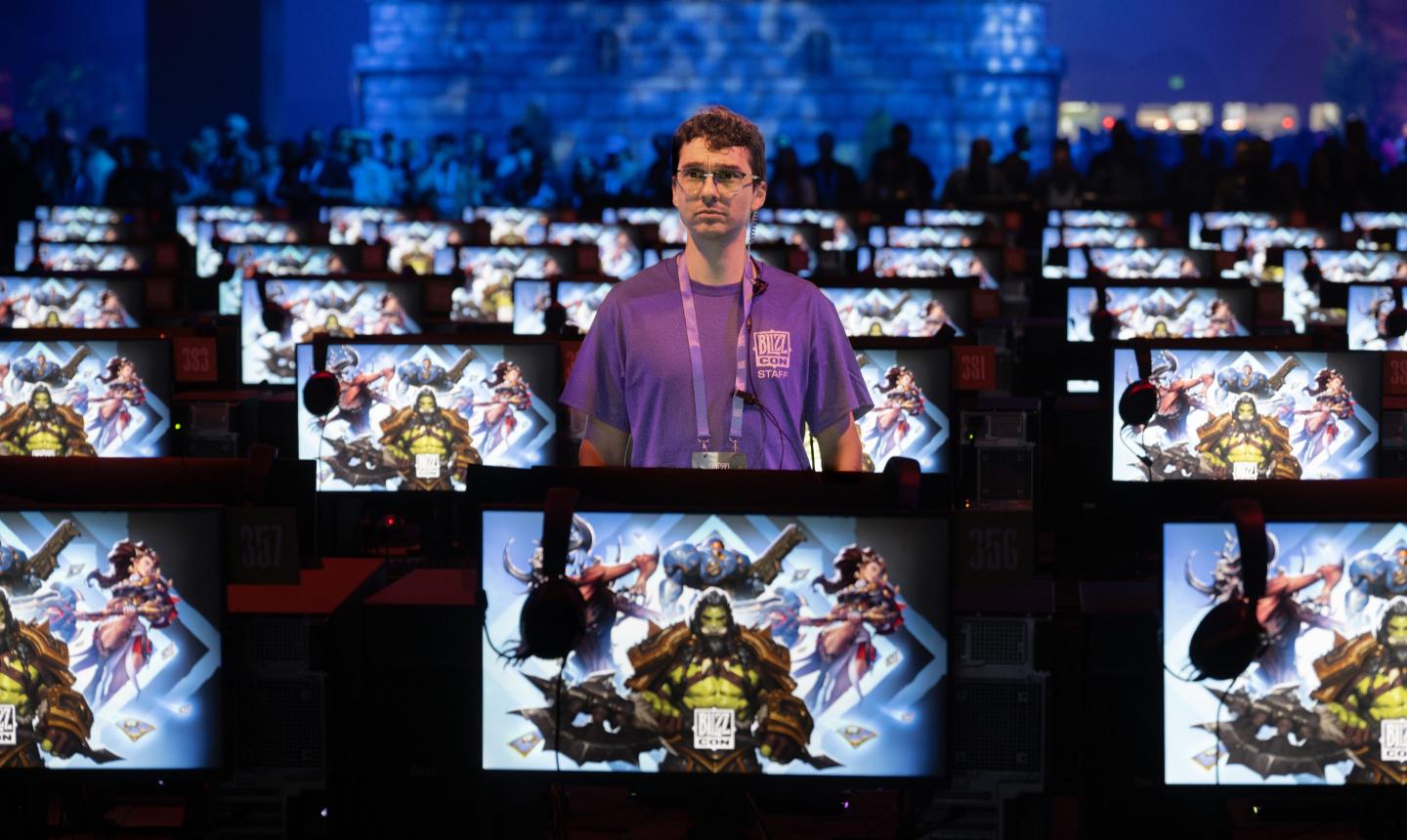
On a sunny Saturday in September, thousands flocked to the Anaheim Convention Center in southern California for Blizzard’s BlizzCon. When organizers opened the gates, a flood of people ran inside. Fans passed under life-size World of Warcraft portals and a massive replica of Diablo’s demonic Lilith character on their way to lines of computers loaded with the game’s latest updates.
Nearby, Sharma walked the floor with members of her executive team, taking in the fandom and people’s excitement over an announcement earlier in the day that Blizzard would release World of Warcraft: Forever, a reimagining of the original WoW.
It’s too early to know whether all of Sharma’s moves are working; the next test is Microsoft’s quarterly earnings report this month. Sharma has set a long-term goal for Xbox to become one of the few entertainment platforms to reach more than 1 billion people a day. Right now, it has around 100 million daily active users.
Active console usage has rebounded year over year, compared with the previous year’s decline, and Sharma said she expects financial improvements to start showing in Microsoft’s fiscal 2027. As it stands, the price of the Helix console has internally been projected to cost consumers between $1,200 and $1,800, unless Microsoft decides to subsidize the cost.
That’s a hefty price tag, especially at a time when consumers have so many other gadgets, from smartphones to wearable AI devices competing for their dollars. Piers Harding-Rolls, a gaming analyst at Ampere Analysis, said the global console market remains capped at roughly 200 million users per generation. Gen Z and Gen Alpha are largely skipping dedicated home consoles for mobile, PC, and platforms like Roblox, he said.
Mindy Schauer/MediaNewsGroup/Orange County Register via Getty Images
There are many signs of Xbox’s legacy throughout Microsoft’s campus. At its campus store, employees and visitors can get the latest products, and when you walk into the Xbox building, you are greeted by a life-size statue of Halo’s Master Chief. Upstairs, an equally large replica of the Xbox Series X console is covered in its creators’ signatures.
At the design lab, staff members use massive 3D printers to manufacture design concepts for Xbox components. They also create 3D renderings of different hand and head sizes to study how controllers might fit and weigh in a player’s grip, or how a headset will feel.
Sharma said she has no timeline for how long she expects to be Xbox’s CEO.
Back at her office on this brisk September afternoon, I’m scheduled to tour the lab with her. A company shuttle arrives to take us there.
Before getting up, I prod her once more on the big question: Will Xbox be a Microsoft division two years from now?
“I think that we’re going to be an important part of Microsoft for a very long time,” she said.
