


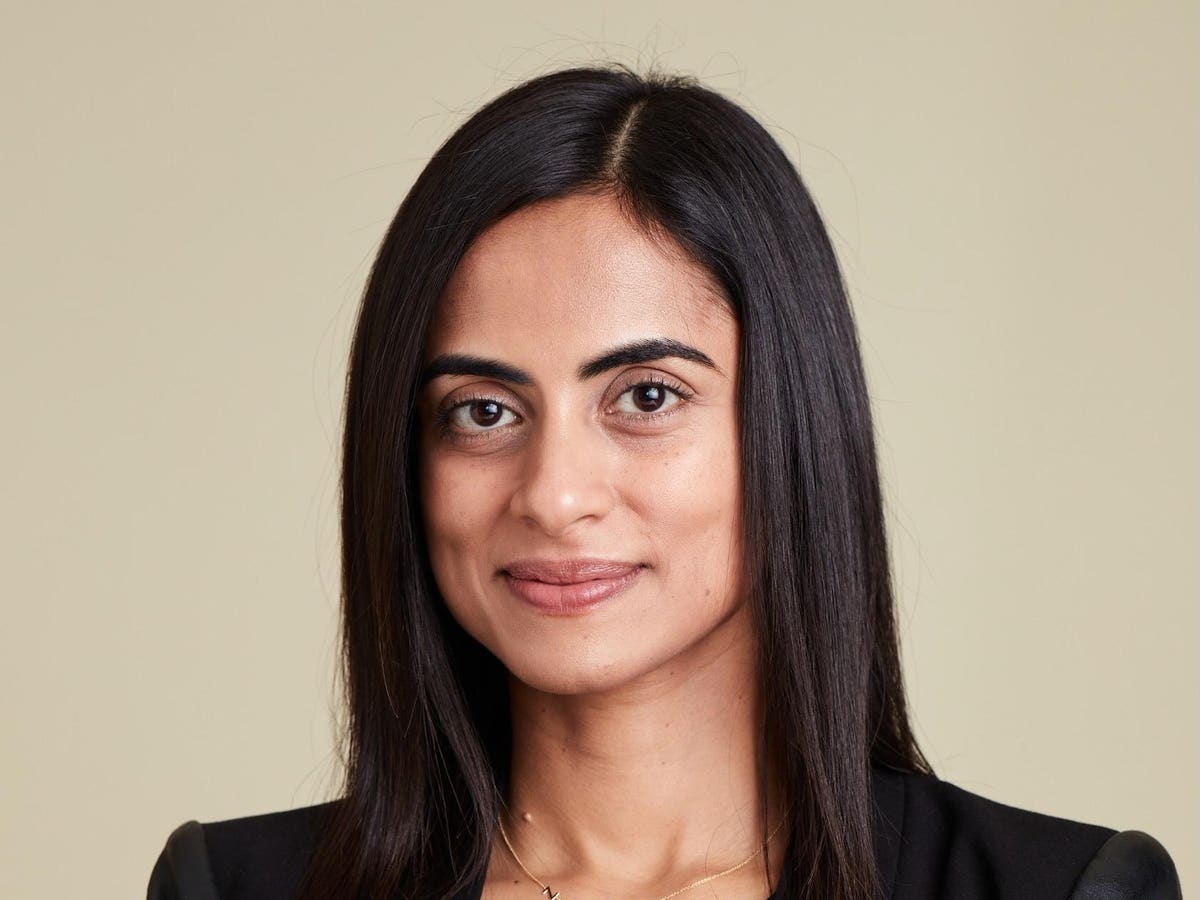

Dhivya Suryadevara, President of Fiserv, Inc.
Fiserv
« The winners of the AI revolution? Those companies haven’t been determined yet, » said Jose Rasco, Chief Investment Officer at HSBC, at a press event in New York on Wednesday. « Remember, Google didn’t go public until 1998. We’re still at the beginning. » In fintech, that’s not a reason to wait. It’s a reason to move. The infrastructure, trust systems, and client relationships being built right now will determine who wins, and the window to build them is open today, not indefinitely.
Rasco sees the AI revolution moving through two distinct phases. The first is convergence, where combining technologies produces exponential rather than additive results. The second is diffusion, where AI moves beyond the companies building it and spreads across every sector of the economy.
« When you put one plus one together, you get three, five, and seven, » he said. « The earnings delivered and the stock price performance of companies using AI is double what you’re seeing with others. » The line, he argues, is parabolic, and we’re in the early part of the curve.
While the AI era’s defining companies may still be forming, the race that will determine how AI improves financial lives is well underway. Inside the core banking software powering most U.S. banks. Inside the advisor relationships managing trillions in assets. Inside the consumer apps that 10 million everyday Americans use to manage their paychecks.
The companies building them aren’t unknown startups. They’re some of the most established names in banking, wealth management, and consumer fintech. And they’re all arriving at the same conclusion from different directions: the more AI advances, the more the human relationship matters. The data already shows it.
The AI Race Nobody Has Won Yet
On Wednesday, HSBC released new findings from a survey commissioned by Ipsos Asia Limited of 10,000 affluent and high-net-worth individuals across 10 markets, including more than 1,000 in the U.S., exploring how people use AI in financial and investment decision-making. Fifty-seven percent of U.S. affluent investors use AI for financial and investment tasks. But only 7% cite AI as the most influential factor in their last investment decision. When asked where their last investment idea came from, 59% said financial professionals and institutions, versus 19% who cited AI.
The pattern sharpens at the highest wealth levels. Among U.S. high-net-worth investors, 67% say their last investment idea came from a financial professional. Only 16% cite AI. Among investors who use AI heavily, 77% still cite the need for reassurance from a human advisor while 68% look to advisors for strategic expertise.
« AI has democratized access to information, » said Racquel Oden, Head of International Wealth Management and Private Banking, U.S. at HSBC. « But information isn’t advice. That’s the distinction. »
The gap between access to data and the judgment to act on it is reshaping how fintech companies think about their role. Laurel Taylor started Candidly in 2016 to solve one of the most stubborn problems in American personal finance: the collision of student debt and wealth building. A decade later, the platform has raised more than $40 million and counts UBS, Fiserv, and Salesforce among its clients, embedding its tools inside the financial institutions and employers that serve millions of Americans. The shift she’s watching in fintech is unmistakable: « The question is no longer just how fast to grow, » she said. « It’s about scaling trust. »
That is the race. And right now it’s playing out on three fronts.
The Fintech Infrastructure Layer: Rebuilding From First Principles
Fiserv and FIS together underpin the core technology of thousands of U.S. banks, credit unions, and financial institutions. The scale of what they collectively power is staggering. FIS services $8 trillion in assets, counts 95% of the world’s leading banks among its clients, and serves 14,000 financial institutions across 150 countries, including 58% of large and regional U.S. banks with more than $10 billion in assets, according to the company.
Fiserv processes 25,000 financial transactions per second at peak, serves 10,000 financial institution clients, and has 1.6 billion issuing accounts on file across six million merchant locations globally, according to the company.
When these two companies make a bet on AI infrastructure, it is a signal about where the entire financial system is heading.
Both launched major AI infrastructure plays this year. Both are making the same argument: this transformation requires rearchitecting from scratch, not optimizing existing processes, but questioning whether those processes should exist at all.
« If a process is A plus B plus C, you don’t ask how do I optimize A, B, and C, » said Dhivya Suryadevara, President of Fiserv, who came to the role six months ago from a career spanning GM, Stripe, and a $20 billion fintech and health tech business at UnitedHealth. “It’s literally, do I even throw B out? Does this process even need to exist?”
That first-principles thinking shapes everything about how Fiserv built agentOS, an AI operating system for banks developed with OpenAI and AWS, covering workflows from commercial loan onboarding to AML triage. The platform is LLM-agnostic by design, with nine fintech partners already signed to its agent marketplace. But Suryadevara is deliberate about one governing principle above all others.
« Instead of saying build it and then make sure it becomes compliant, we’re building it ground up with the right rules in place, » she said. « You can’t do that as an afterthought. »
The early results from beta suggest banks agree. Operational intelligence, automated report generation that previously consumed significant manual effort, is already live. Commercial loan onboarding is in beta with City National, compressing a process that used to require months of manual document review into something agents can handle end-to-end. Deposit intelligence, which helps banks understand client retention risk in real time, is next.
« We want our clients to have choice, » Suryadevara said. « The way we do that is by giving them an opportunity to deploy whatever agents they need in a governed and safe way. »
The inbound from Fiserv’s client base after the agentOS announcement has been strong, according to the company. Banks aren’t asking whether to adopt AI agents. They’re asking which ones to deploy first and how to do it safely. Financial institutions are no longer in a wait-and-see mode. They’re in a build-and-govern mode.
When asked what Suryadevara’s vision for what banking operations look like by 2030, she said adoption will be iterative, starting with high-fidelity, lower-stakes use cases like report generation and loan onboarding, then broadening as trust in the systems builds. Roles will evolve toward what she calls the checkers, prompters, and architects, people who know how to use AI tools to think bigger, not just faster.
« The marginal cost of intelligence is dropping significantly, » Suryadevara said. « If you’ve not been exposed to area X, Y, and Z , that doesn’t matter anymore. You can open Claude or ChatGPT, spend a weekend getting deep in a topic, and come out quasi-expert in a domain you were completely unfamiliar with. »
FIS made the same bet from a different angle. In May, the company announced a partnership with Anthropic, deploying a Financial Crimes AI Agent already live at BMO and Amalgamated Bank, designed to compress anti-money-laundering investigations from hours to minutes. President and CEO Stephanie Ferris has been explicit: FIS isn’t trying to become an AI model company. It’s positioning itself as the data control layer between frontier AI and the financial system.
Inside FIS, Sherry Baker, Head of Global Wealth Products and Services, runs Reliance Trust Company, a regulated entity actually deploying AI in its own operations, not just advising banks on how to do it. FIS has also partnered with InvestCloud to integrate AI directly into its wealth platforms, Baker said.
At Reliance Trust, AI agents handle the operational work of processing transactions, but not all the way through. « Where the human operator has to push the button and send a billion dollar trade to DTCC, that stops, » Baker said. “They can review everything and make sure it’s in good order.”
A billion dollar trade pausing for human review is what governance by design looks like in practice. It’s a deliberate architecture decision about where human judgment remains non-negotiable. Baker is hoping her team will be among the first to have Anthropic engineers embedded directly with FIS to accelerate the build, a signal of how seriously the company is treating the deployment.
In the meantime, Baker’s democratization point connects the infrastructure investment to its real stakes. « Forty-six percent of the US population is mass affluent, » she said. « If we can bring these services and tools down market, it really opens up who they can sell to, who they can create offerings for. »
The infrastructure layer isn’t just about making banks more efficient. It’s about making the financial system accessible to more people.
The Fintech Relationship Layer: Human in the Helm
At RBC Wealth Management, a father and son on the same advisory team decided to run an experiment.
Same client. Same meeting. Same preparation task. The son did it manually, stitching together client history, portfolio context, relationship notes. It took 90 minutes. The father used AI-assisted meeting preparation. It took seconds. When they compared outputs, they were essentially identical.
« What it showed was that you could trust the process with AI, » said Eran Agrios, SVP and GM of Financial Services at Salesforce, who has led the company’s financial services business for 18 years. « Those advisor teams are super confident. They’ve had to do this by hand for many, many years. And we got to the same result. »
RBC was an early design partner for Salesforce’s Agentic Advisor platform, which launched in June.
That experiment captures a problem Agrios knows well. Financial advisors spend up to two hours preparing for every one hour with a client. Half their working day disappears into administrative work that has nothing to do with giving advice. In most platforms, getting to basic client information requires navigating layers of manual complexity that simply shouldn’t exist — what Agrios calls the 27-click problem. Agentic Advisor, Salesforce’s new AI suite for wealth management, is built to solve it.
The manual work problem isn’t unique to wealth management. Erica Dorfman, Chief Financial Officer of Brex — whose acquisition by Capital One earlier this year marked one of fintech’s most closely watched exits — described the same dynamic inside corporate finance.
« We have agents that can do that back and forth and validation, and then we take out only the most important decisions for the human to make, » she told me. At Brex, AI agents now handle transaction reconciliation end-to-end, compressing an eight-day month-end close toward three.
« It doesn’t mean you don’t have to have people on the finance team, » Dorfman said. « It means you get to audit 100% of transactions instead of some small sample. »
The pattern is consistent across every financial function: AI absorbs the administrative layer, and humans move up to the work that actually requires judgment. But the RBC story points to something the industry is only beginning to reckon with beyond productivity gains.
The United States is facing a critical shortage of financial advisors, according to HSBC. The baby boomer generation of advisors is retiring en masse, and there aren’t enough younger advisors to replace them, even as the great wealth transfer creates more demand for advice than ever before.
« We don’t have enough advisors, » Oden said. « If individuals are telling you ‘I still want advice, I still need trust, and I still need it to come from a professional’ we’ve got to make sure as an industry we have enough professionals to service this affluent client base. »
AI doesn’t solve the advisor shortage. But it changes the math of what one advisor can do. When the 90-minute meeting prep takes seconds, an advisor can take more meetings, service more clients, and spend more time on the work that actually requires a human — the complex, multi-generational financial conversations that no agent can replicate.
The next phase of Agentic Advisor, already in prototyping, is goal-based agents. Give an agent a specific objective, find prospective clients in a certain demographic in a certain geography, and let it work autonomously toward that goal. The advisor becomes, as Agrios put it, “human in the helm.”
That’s where the entire industry is heading. And the HSBC data shows why it works. The hybrid model of AI for discovery and research, humans for decision judgment and conviction, is what investors at every wealth level say they actually want.
« The future of wealth management isn’t about choosing between technology and people, » Oden said. « It’s about combining the power of AI with the insight and trust that only a financial professional can provide. »
The Consumer Fintech Layer: The No-Trade-Off Thesis
Janelle Sallenave has spent six years at Chime, starting in member experience and now serving as Chief Operating Officer of a company that serves nearly 10 million members, most of whom use it as their primary banking relationship. In May, Chime posted its first GAAP-profitable quarter as a public company, with 25% year-over-year revenue growth.
The operational discipline underneath those numbers is visible in one striking stat: 70% of all inbound customer support is now handled end-to-end by Jade, the company’s AI-driven support system. Not routing. Not triage. Full resolution. Net Promoter Score went up, Sallenave said.
« There is no trade off between driving efficiency and improving the customer experience, » Sallenave said. “You can do both at the same time, if you decide it’s not cost first or member experience first, but I want both and I’m not willing to trade them.”
Sallenave calls it the intersection of three things: the data set, the tech stack, and trust. Chime’s members transact more than 50 times a month on average, a real-time behavioral signal that gives the system genuine context for every decision. The tech stack took years to own fully. And trust is the one that can’t be engineered around.
« It has taken us 14 years every day of our existence to get to a point where Newsweek listed us as one of America’s most trusted companies, third in financial services, » Sallenave said. “That happens in every small bit of the product build. In the moments that matter.”
The most important AI deployments in consumer fintech aren’t the flashiest ones. They’re the dispute resolutions, the fraud decisions, the customer support moments when something goes wrong and the institution has to show up correctly at scale, every time.
« 14 years ago, the policy was the policy, whether it was you or me or my fraudster friends, » Sallenave said. “Now with data and AI, we can be way more personalized in a way that is scalable.”
In most industries, AI compresses human judgment, automating decisions and flattening the difference between a seasoned professional and a capable novice.
In financial services, the evidence points somewhere different.
AI is clearing the administrative layer: the 27 clicks, the 90-minute meeting prep, the manual work that has consumed the industry for decades. And as that layer disappears, what remains is the human moment: the conversation that requires judgment, trust, context, and the kind of relationship no agent can replicate.
Suryadevara captured it at the infrastructure level: AI transformation means redirecting talent toward what matters most to clients. Baker captured it in her regulated entity: the billion-dollar trade stops for human review. Agrios captured it at the advisor layer: human in the helm. Oden captured it in the data: AI boosts confidence, advisors provide conviction. Sallenave captured it at the consumer level: 70% automated, NPS still going up.
Every source, from every layer, arriving at the same place.
Rasco has watched this pattern play out before, he said. Years ago, when Amazon was booming, U.S. presidents from both parties predicted it would destroy the American economy. Instead, 300,000 retail jobs disappeared and 1.2 million higher-paying jobs in logistics, distribution, and warehousing took their place. « It’s called creative destruction, » he said. « New technology lifts productivity, and old technologies die. The advantage is you have to allow that process to unfold. »
In financial services, the process is unfolding right now. The administrative layer is dying. What replaces it is the human moment — more skilled, more trusted, more valuable than before.
Describing how HSBC wins complex international clients, Rasco didn’t point to technology or data or models. He pointed to presence as the greatest competitive advantage.
“You get on a plane,” he said. « You fly to Mexico City. You drive two hours outside the city. You go to their home for dinner. You’ve got a really good shot at getting that account. »
No model replicates that.
The AI race in fintech is well underway. And it won’t be won by the companies with the best models. It’ll be won by the ones who used AI to make more of those dinners possible.
