


SINGAPORE – The modern Singaporean wardrobe seems to be preparing for a hike, whether its owner is headed for a mountain trail or the office.
Outdoor-inspired fashion, once largely associated with hikers, campers and mountaineers, has found a growing audience beyond the outdoor community, as more consumers embrace lifestyles centred on wellness, travel and time spent outdoors.
Once considered specialist labels, California-based outdoor brand Patagonia and French alpine sports brand Salomon have become fashion fixtures in their own right.
The growing demand for outdoor-inspired fashion led Canadian outdoor brand Arc’teryx to open its first Singapore store at The Shoppes at Marina Bay Sands in January, while French-Japanese bag label Topologie made its local debut at Jewel Changi Airport in April.
Adrian Huang, a fashion lecturer at Lasalle College of the Arts, says the trend has created a clear opportunity for brands, particularly those founded by people already immersed in outdoor culture.
“As more communities get involved in outdoor lifestyles, the clothes naturally trickle into daily wear,” he adds, tracing part of the trend’s appeal to the pandemic years, when nature walks and outdoor activities became one of the few available forms of escape.
For content creator Zi Xin Owyong, outdoor clothing entered her wardrobe out of necessity. While planning a graduation trip across North America and Europe in 2022, she bought her first UV jacket for visits to national parks and hiking trails, before adding hiking pants and rain shells.

Zi Xin Owyong wearing outdoor brand Berghaus on a hike at the Isle of Skye in Scotland.
PHOTO: COURTESY OF ZI XIN OWYONG
Today, she owns pieces from brands such as Patagonia, Lululemon, Mountain Warehouse and Berghaus, which she wears for activities from hiking and running to pickleball and cycling.
“I value function over fashion,” says the 27-year-old. “They do what they’re designed to do – protect against sun, wind and rain, while being comfortable, lightweight and easy to move in.”
She also wears them beyond outdoor activities. “I don’t see why not, if they look and feel good. There’s also less consumption if we choose pieces that can be worn across multiple occasions.”
Assistant dean Wong King Yin at Nanyang Technological University’s (NTU) Nanyang Business School says outdoor-inspired clothing appeals to consumers because it offers versatility.
In Singapore, where people move between humid weather, sudden downpours and heavily air-conditioned spaces, such clothing functions as “all-weather wear” that can transition between different environments, she adds.
Wong, who researches consumer behaviour, says outdoor-inspired fashion allows consumers to align themselves with an “active, healthy and adventurous lifestyle”, while expressing a desire to reconnect with nature.
Lasalle’s Huang says the appeal also reflects broader shifts towards wellness, travel and outdoor recreation.
“If you think about technical gear, two words that come to mind are ‘preparedness’ and ‘protection’,” he says. “It almost feels a bit like armour, which gives you a sense of confidence and security when you wear it.”
The Straits Times meets two home-grown brands betting big on outdoor-inspired fashion, amid the growing interest in utility wear.
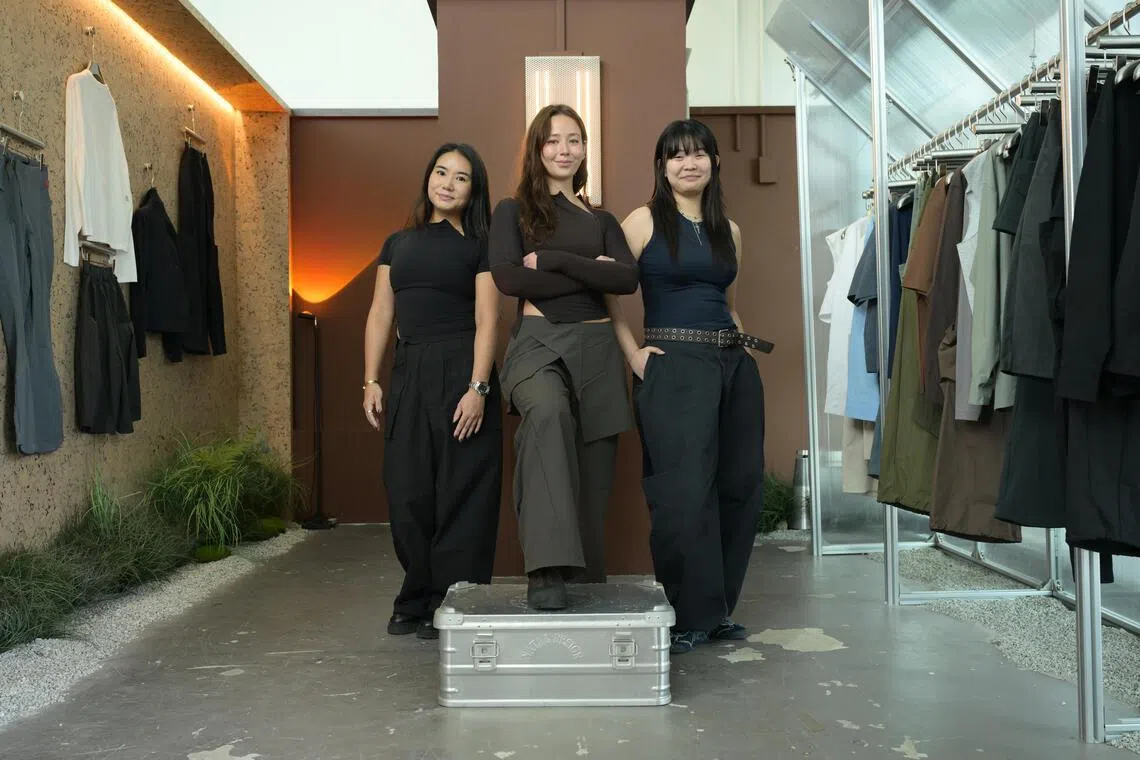
Dirty Manners’ (from left) brand and marketing lead Nathalie Soo, founder-creative director Annelieke Dompeling, and design and production lead Rachel Tan.
ST PHOTO: NG SOR LUAN
When Dirty Manners launched in 2022, its focus was largely on everyday essentials made from natural and recycled materials. The brand emerged from founder Annelieke Dompeling’s belief in spending more time outdoors, and building a deeper connection with nature.
Today, the Singapore label has evolved into a contemporary utility wear brand – reflecting what Dompeling, 31, sees as growing demand for clothing intended for the outdoors and everyday life.
While the brand’s core philosophy – encouraging people to reconnect with nature, explore new places and step outside their comfort zones – has remained unchanged, its product offering has expanded into what Dompeling describes as two categories: “a line centred on basic essentials” and a newer technical line that draws from the outdoor world.
The latter incorporates abrasion-resistant fabrics such as Japanese-milled Cordura synthetics and natural bio-based fibres for comfort and performance. The jackets are constructed from windproof, water-resistant cotton canvas for tougher conditions.
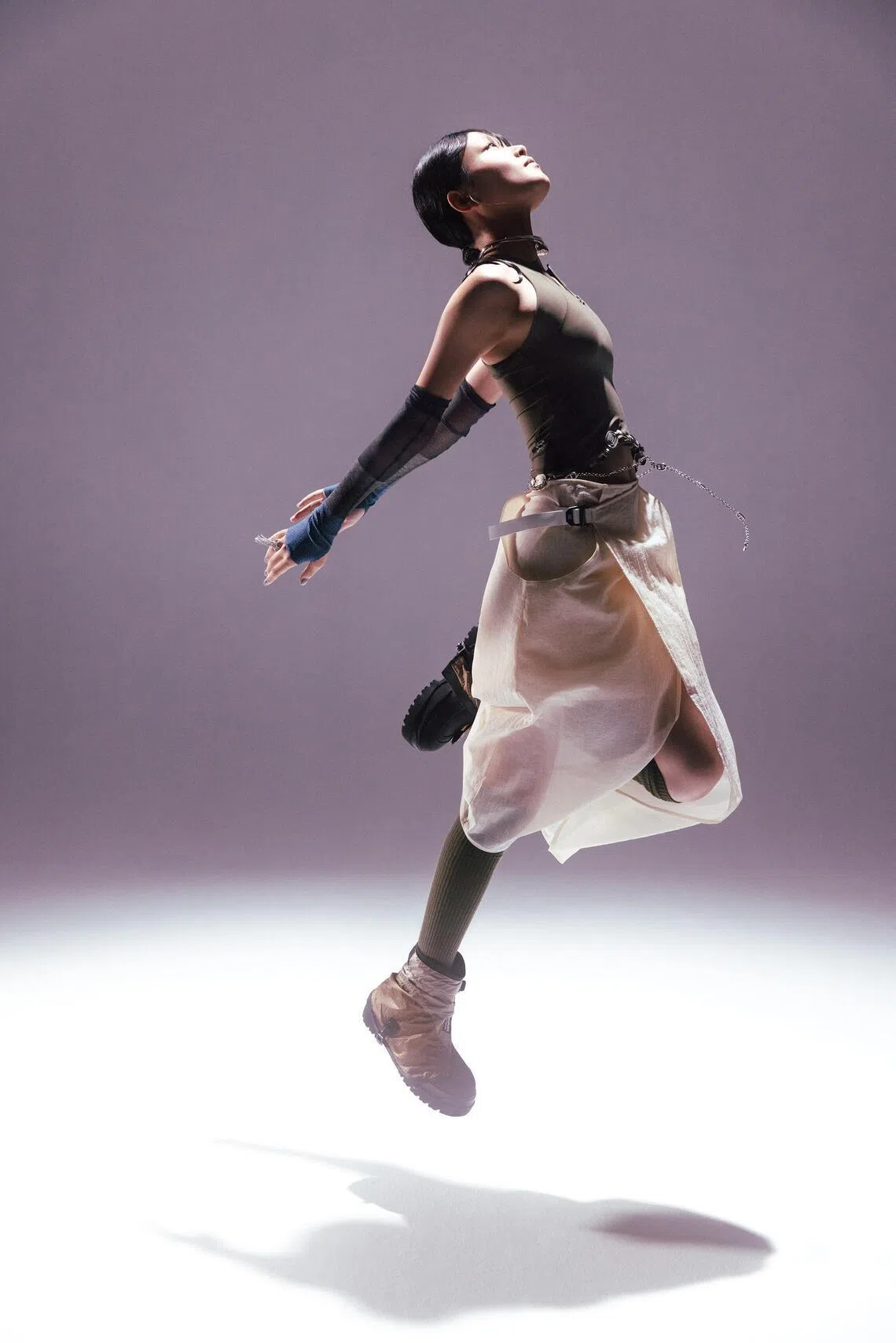
The Elix Tank and Anouk Wrap Skirt from the Utility Under Pressure Collection.
PHOTO: DIRTY MANNERS
Her vision for the brand started young, says Dompeling, who spent much of her childhood on canoe expeditions through remote wilderness areas organised by her father. The experiences not only sparked her love for the outdoors, but also gave her an appreciation for reliable, functional gear.
“It was a very natural desire to eventually start designing pieces that are more performance-based and technical,” she adds.
Yet traditional outdoor apparel never particularly appealed to Dompeling aesthetically, inspiring her team to move into contemporary utility wear – clothing that combines outdoor functionality and everyday wear.
That vision came to life in Utility Under Pressure, the brand’s first contemporary utility wear collection that launched in March.
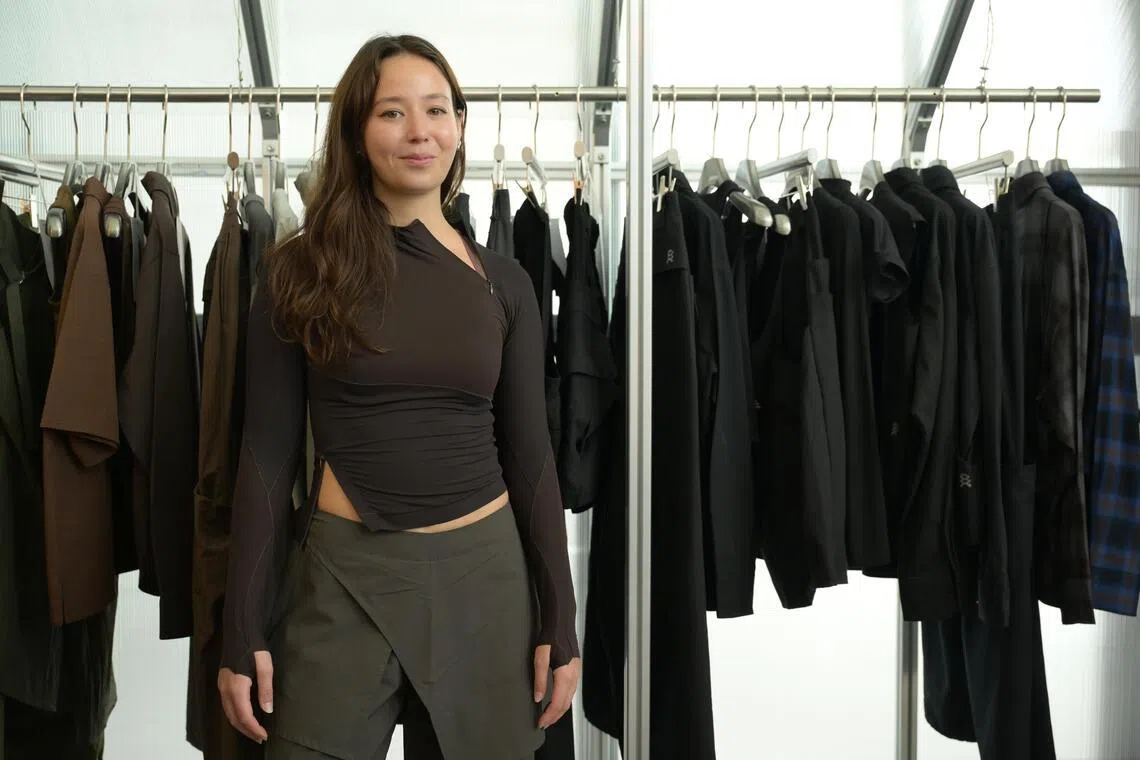
Founder and creative director Annelieke Dompeling grew up going on canoe expeditions in the wilderness with her father.
ST PHOTO: NG SOR LUAN
The collection includes pieces such as the Taiga Cordura Ripstop Pants ($390), Cordura Utility Bermuda Shorts ($330), skirts ($215 to $235), shirts ($270 to $290) and jackets ($405). Lightweight, durable and easy to move in, the pieces are intended to function on an expedition as comfortably as they do in everyday life.
The label’s upcoming Autumn/Winter 2026 collection, The Crossing, continues that direction through cargo outerwear, trousers, fleece layers and accessories (from $75 to $570). It will be presented at Seoul Fashion Week in partnership with the Singapore Fashion Council before arriving in stores in September.
Central to the collections is what Dompeling calls “quiet utility” – taking the durability and functionality associated with outdoor gear, and translating them into contemporary silhouettes.
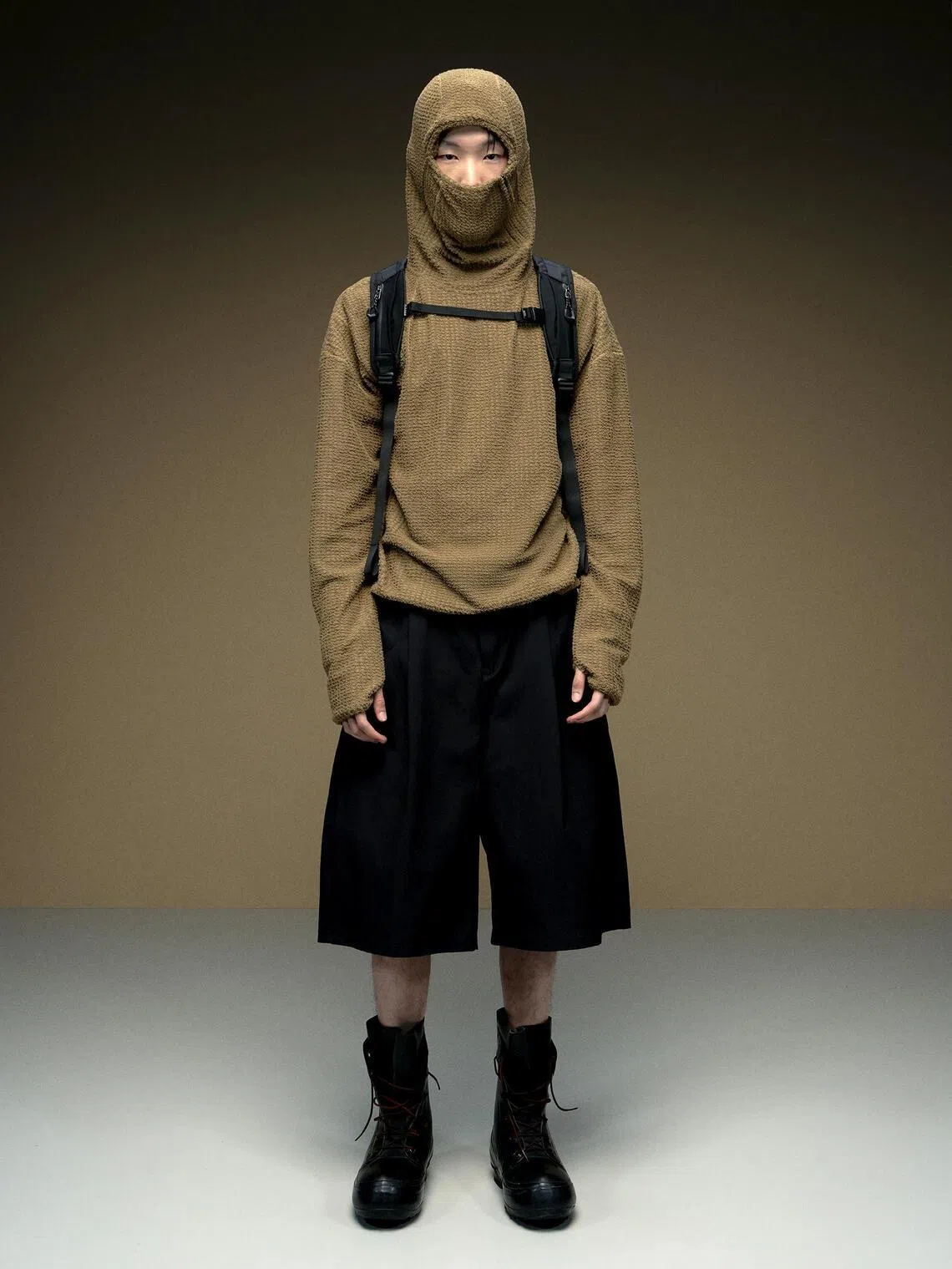
The Kyne Thermolite Balaclava Fleece and Cordura Utility Bermuda Shorts in The Crossing Collection, launching in September.
PHOTO: DIRTY MANNERS
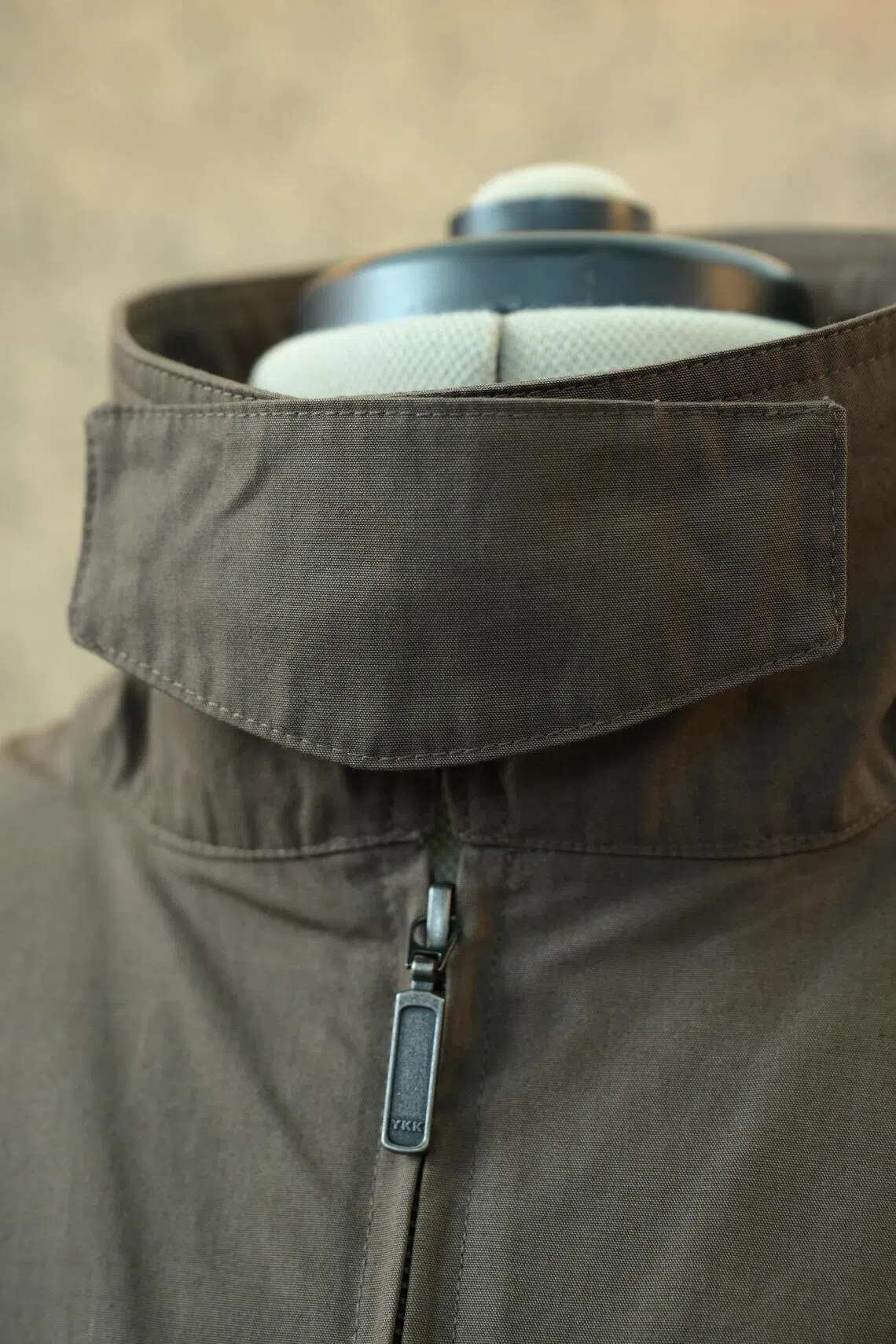
Design details from Dirty Manners, a Singapore-based contemporary utility wear brand.
ST PHOTO: NG SOR LUAN
While traditional utility wear often communicates its function through overt technical detailing such as visible cargo and field pockets, Dirty Manners takes a subtler approach through concealed pocket placements with cleaner silhouettes.
“If you look at utility wear, a lot of it is outward,” she says. “We do the exact opposite, where function is built inward and is unseen.”
Dompeling says consumers regularly wear Dirty Manners pieces for work, travel, dinners and nights out. Belgian techno DJ Charlotte de Witte recently wore the label’s Cordura Work Lightweight Jacket and Pants set during a performance in Singapore.
One customer, a hairstylist, told the brand she wears its cargo skirt daily because its discreet stash pockets comfortably hold her tools throughout the day. Others say that pieces originally purchased for travel or outdoor adventures have become staples in their everyday wardrobes.
Dirty Manners initially catered largely to professionals aged between 18 and 38, but now counts customers in their 70s among its clientele. The brand, which generates six figures in annual revenue, ships to markets including Europe, United States, China and Thailand – generating six figures in annual revenue.
“I think people are craving that nature feeling,” Dompeling says, adding that clothing designed for the outdoors offers a sense of “readiness and grounding” that people often miss in modern life.
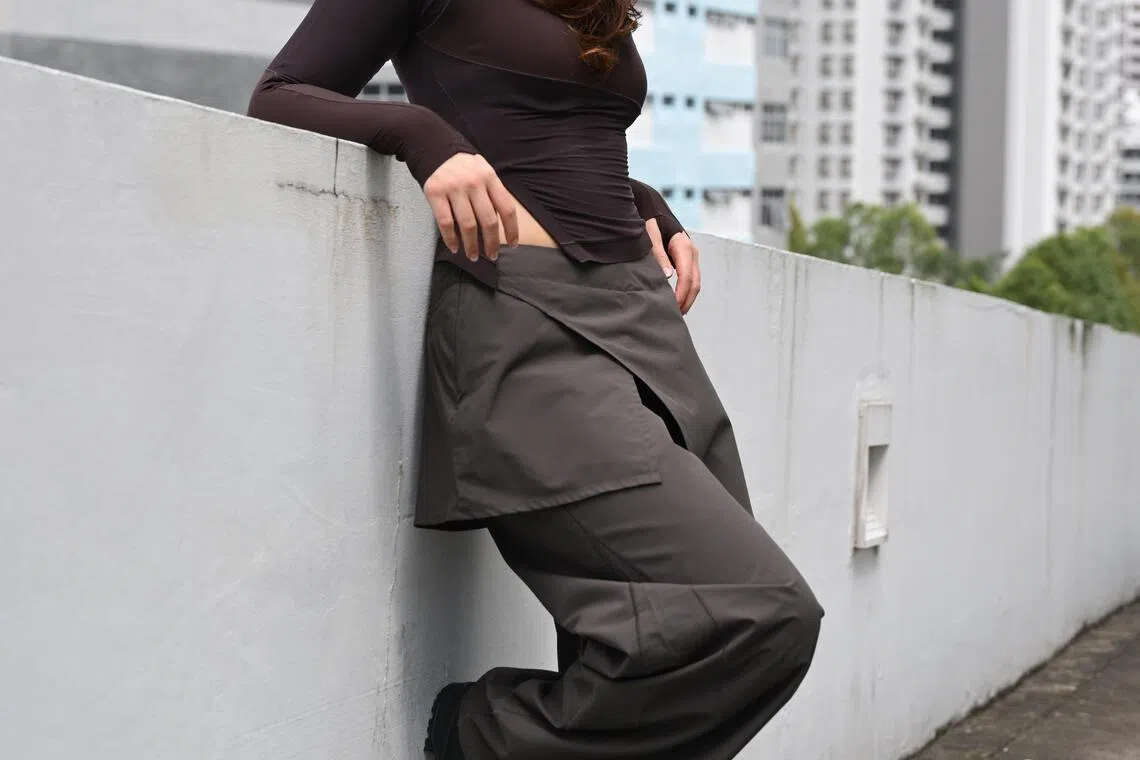
Annelieke Dompeling wearing the Mora Active Top and Neo Skort Pants from The Crossing Collection, launching in September.
ST PHOTO: NG SOR LUAN
While outdoor-inspired fashion has become increasingly popular, Dompeling believes its long-term appeal lies beyond aesthetics.
“Trends inevitably fade, but the underlying human desire for comfort, versatility and durability isn’t going anywhere,” she says.
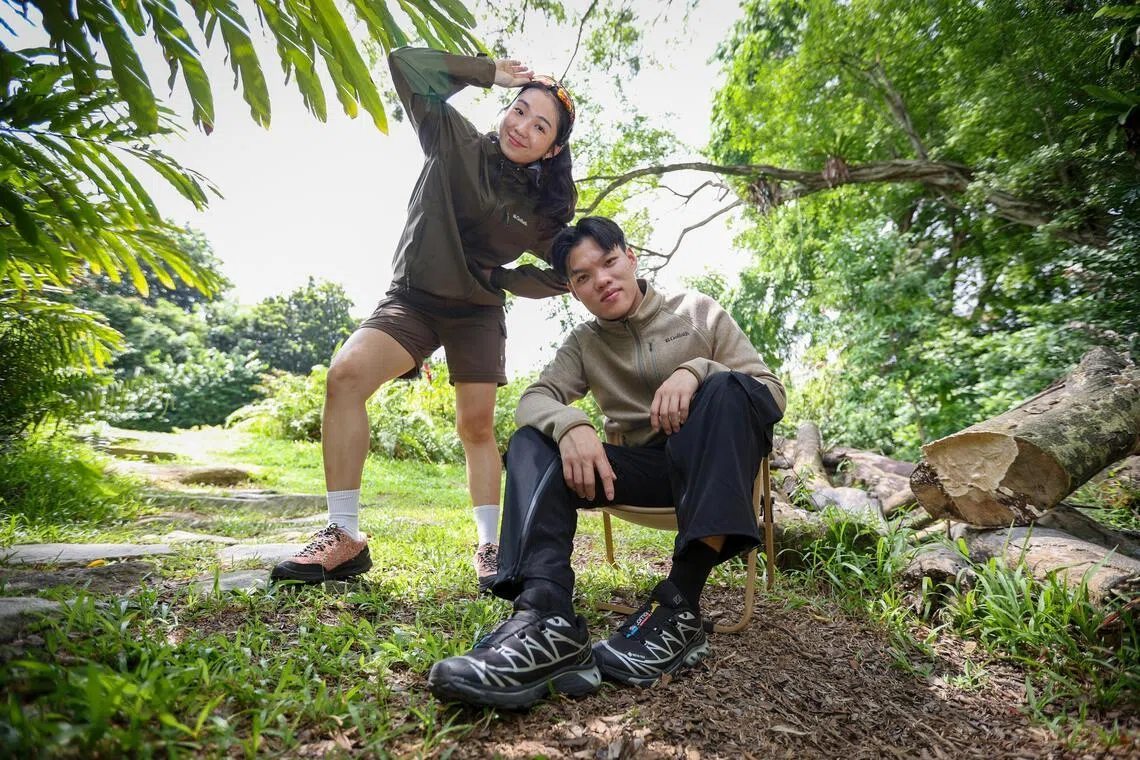
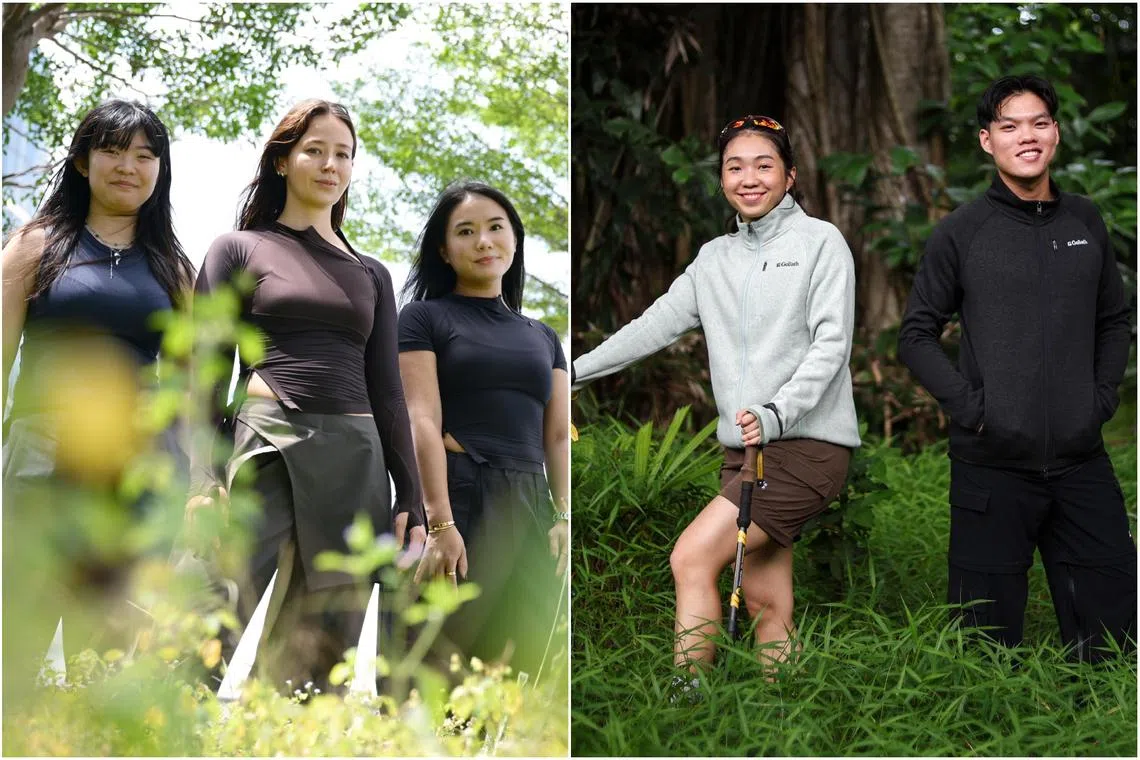
Goliath Outdoor co-founders Maribelle Su and Kenneth Wong, wearing the Trail Flex Convertible Pants. Su sports the Stormshield Ultralight jacket, while Wong is wearing the Core Comfort Fleece jacket.
ST PHOTO: SARAH LEE
For Kenneth Wong, the idea for adventure and hiking brand Goliath Outdoor began in the Himalayas.
The 28-year-old former consultant and avid mountaineer, who has climbed multiple peaks above 6,000m, was preparing for a mountaineering expedition when he found himself caught between premium outdoor brands selling technical jackets for $500 to $800, and cheaper alternatives that failed to deliver the performance he needed.
During his climb in the Himalayas, a lower-cost jacket broke, leaving him drenched and freezing in the middle of the mountain.
“There was a gap in the market,” he says. “Why isn’t quality gear easily accessible to everyday people like ourselves?”
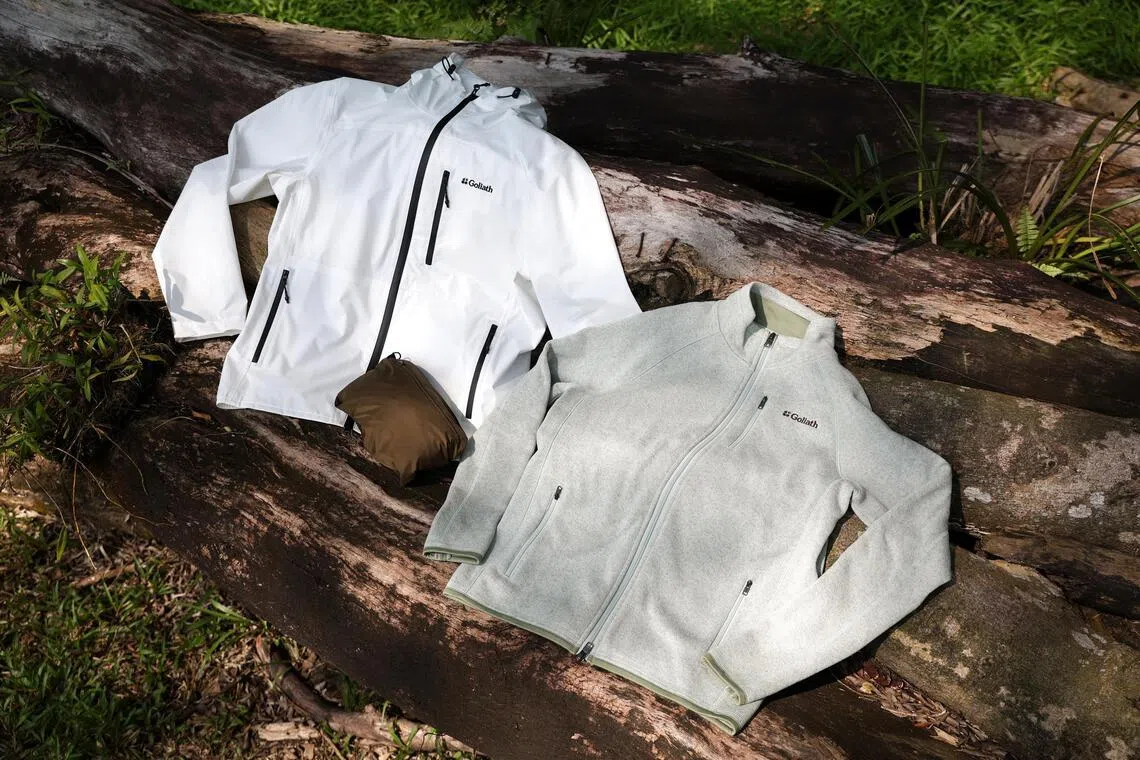
Goliath Outdoor’s Stormshield Ultralight jacket (left), which can be packed into a bag (centre), and Core Comfort Fleece jacket (right).
ST PHOTO: SARAH LEE
That question became the foundation of Goliath Outdoor, which launched in March 2025 with products – including Trail Base Merino tops ($99 to $109), Trail Flex Convertible pants ($149), the Core Comfort Fleece ($129), Stormshield Ultralight Jacket ($189) and Stormshield Shell Jacket ($269) – priced well below those of many established outdoor brands.
At a time when Singapore’s outdoor community has traditionally relied on international labels, Goliath Outdoor is emerging as one of the few Singapore-designed outdoor apparel brands in the market.
The founders say the products are manufactured in the same factories as established global outdoor labels, but sold directly to consumers without traditional retail mark-ups.
Co-founder Maribelle Su, 25, sought to address another pain point. An avid hiker herself, she found that many outdoor brands neither fit Asian women particularly well nor paid much attention to aesthetics.
“The brand is also a lifestyle we see ourselves in,” Su says. “We’re solving for the community, and want to ensure our products meet peoples’ needs.”
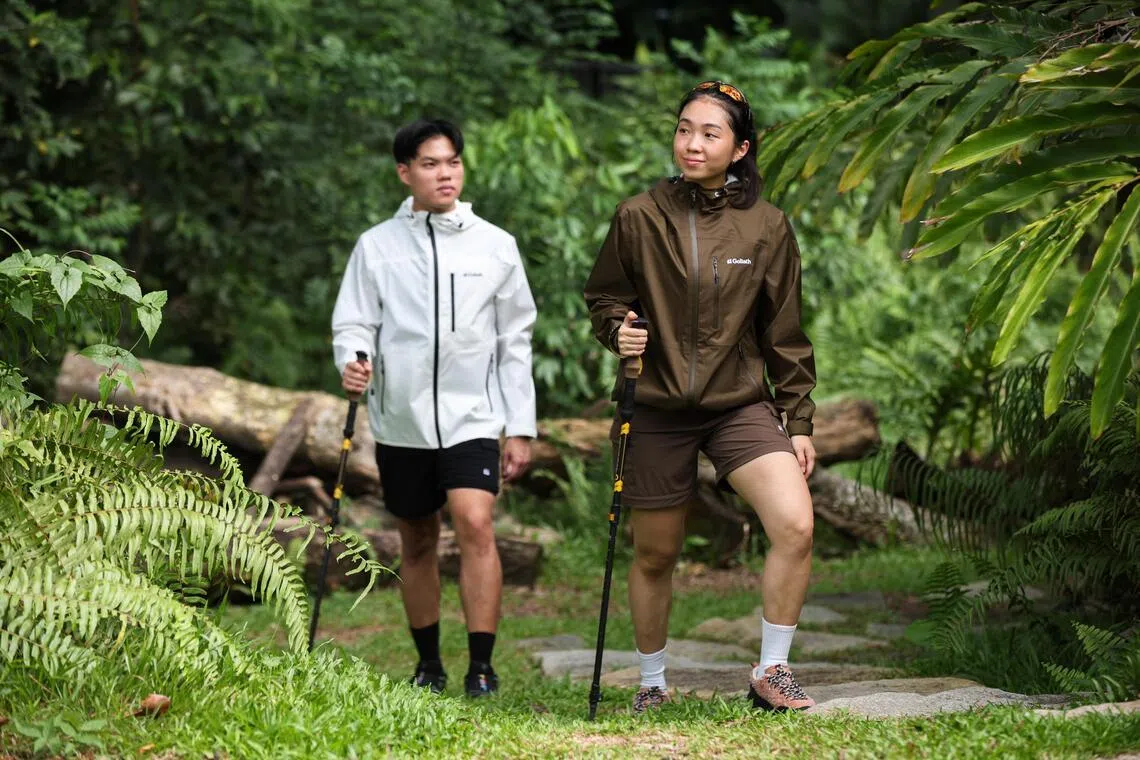
Kenneth Wong and Maribelle Su wearing the Trail Flex Convertible Pants and Stormshield Ultralight jacket.
ST PHOTO: SARAH LEE
The brand’s early growth was fuelled in part by TikTok, where the founders documented the process of building Goliath Outdoor.
In July 2025, a video showing them testing their first waterproof shell jacket in a storm drew about 142,000 views, attracting outdoor enthusiasts in Singapore and abroad.
Su says the response was “very supportive”, which ultimately gave them the confidence to launch a crowdfunding campaign in September 2025.
Within three days of the campaign’s launch, Goliath Outdoor recorded more than $80,000 in sales from customers around the world.
The company crossed six figures in monthly revenue in May, and now receives orders from markets including the United States, Canada, Australia, New Zealand and across Europe through its website.
Most customers, says Wong, purchase the products for their intended purpose of engaging in outdoor activities.
The brand is frequently tagged in photographs from customers’ mountain expeditions, snowboarding trips and hiking trails, though its audience has expanded beyond mountaineers to include runners, motorcyclists, dancers, fishing enthusiasts and travellers.
Its convertible pants originally designed for hikers have found fans among streetwear consumers and outdoor educators, while the ultralight shell jacket has been adopted by everyone from trail runners to motorbike riders.
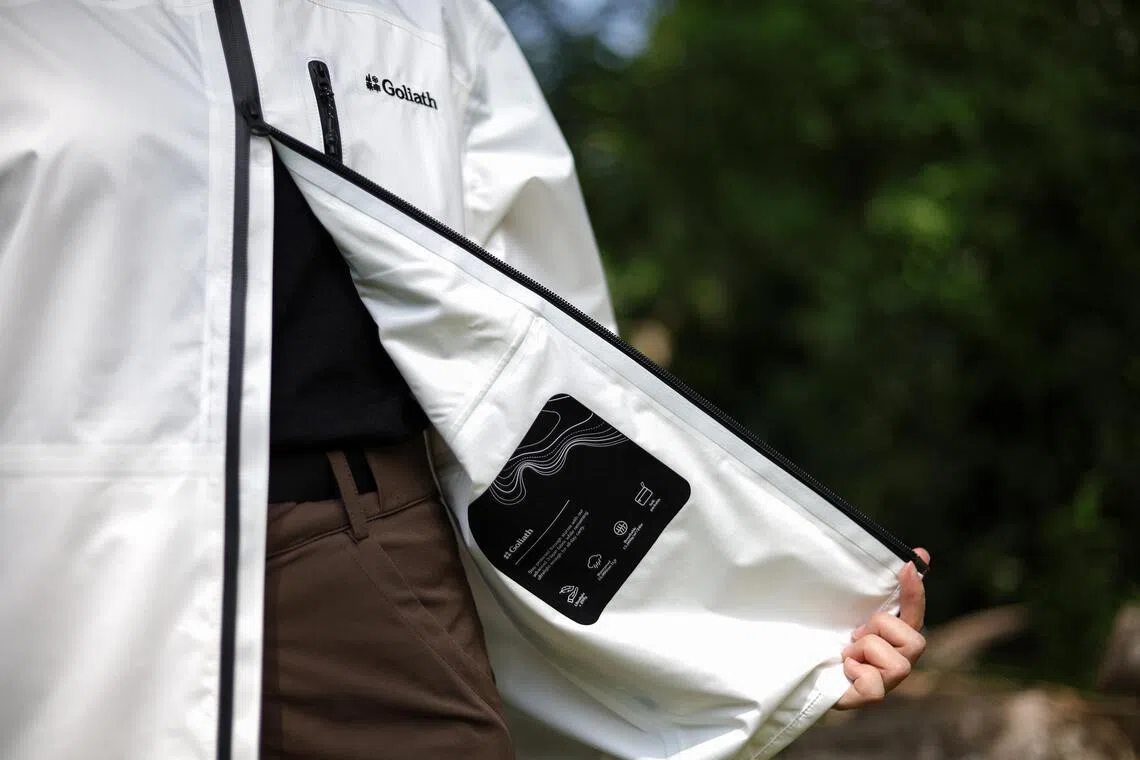
The Outdoor’s Stormshield Ultralight jacket has a two-way zipper.
ST PHOTO: SARAH LEE
“Function comes first and aesthetics after,” says Wong, adding that the brand was not created to capitalise on a fashion trend.
The founders, who became friends while studying at Singapore Management University in 2019, attribute part of that demand to a broader rise in outdoor culture. While Singapore may not have many mountains of its own, Su says more people are travelling for hiking and adventure experiences, while social media has helped normalise outdoor lifestyles.
As people spend more time online, she adds, there is a “growing desire to disconnect and spend time outdoors”.
Growing interest in run clubs, active living and wellness has also encouraged more people to seek out nature as a way to reset, while outdoor-inspired fashion has made the lifestyle feel more accessible to those who may not have considered it before.
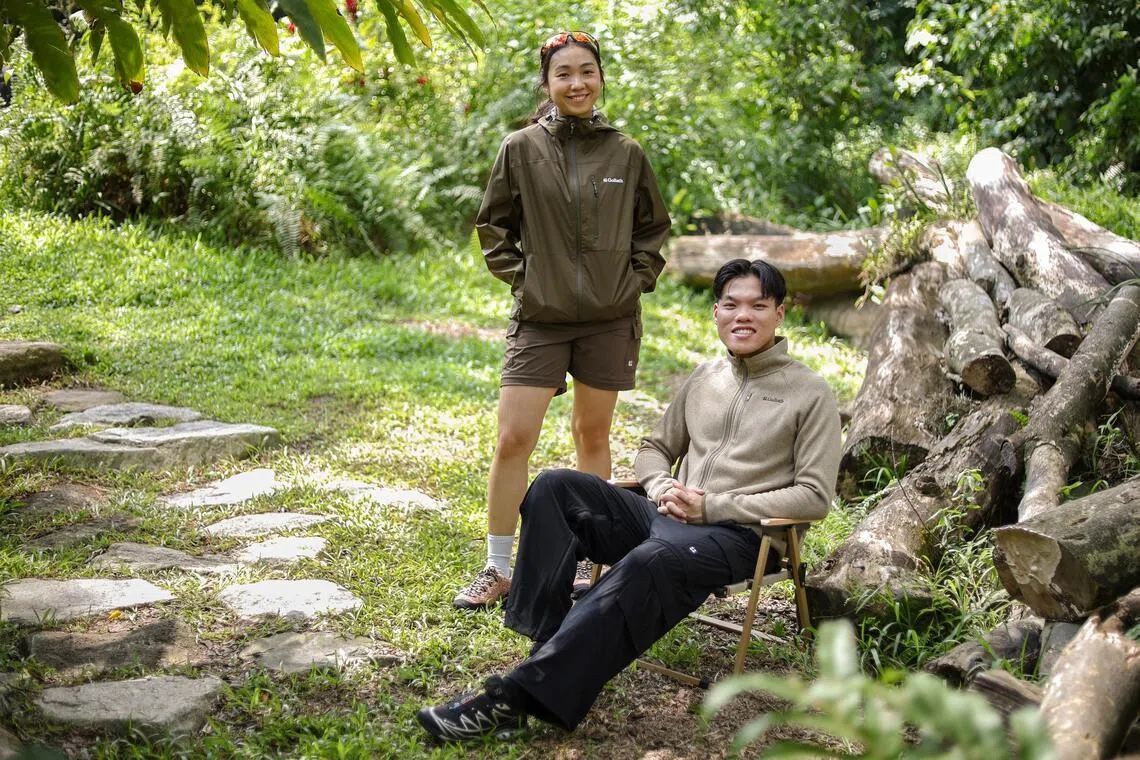
Though barely a year old, Goliath Outdoor is already starting to gain a reputation among outdoor enthusiasts as “Singapore’s outdoor brand”.
ST PHOTO: SARAH LEE
Increasingly, outdoor enthusiasts have begun referring to Goliath Outdoor as “Singapore’s outdoor brand”, a label the founders hope to grow into as they expand overseas.
Longer term, Wong says, the ambition is not only to build a successful business, but also to support causes related to poverty and environmental sustainability, through donations of funds and outdoor gear.
